


Views: 0 Author: Site Editor Publish Time: 2026-03-11 Origin: Site


In factories, warehouses, hospitals, workshops, and even commercial kitchens, people move heavy equipment every day. The difference between “easy movement” and “dangerous effort” often comes down to one small component: industrial casters—also called casters A caster is not the same thing as a vehicle wheel. It’s a mobility unit designed to be mounted under equipment, carts, trolleys, racks, or machinery so that the whole load can move, stop, and reposition safely. When customers ask us, “What is the purpose of a caster?” we usually answer in one sentence: casters turn static equipment into mobile, controllable assets, reducing labor, protecting floors, and improving workflow efficiency.
At Century Langyi casters & trolleys Mfg Co., Ltd., we work with many industries that require reliable movement under real-world load conditions. In this article, we’ll explain the true purpose of a caster, how casters differ from ordinary wheels, what types exist, and how to select a caster system that matches your load, floor, and safety needs—using practical tables and buyer-friendly guidance.
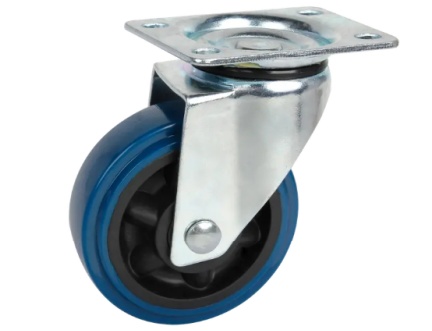
A wheel alone is just a round component that rolls. A caster is a wheel combined with a mounting structure that attaches to equipment and often includes a swivel mechanism and braking function.
Wheel (material and diameter determine rolling behavior)
Fork/yoke (holds the wheel and transfers load)
Mounting plate or stem (connects the caster to the equipment)
Swivel bearing (for swivel casters; allows 360° turning)
Brake/lock (optional; controls movement and direction)
This integrated design is what makes a caster ideal for equipment, carts, and trolleys—where both movement and control matter.
The most obvious purpose of a caster is to make a load movable. Instead of lifting or dragging, you roll. This reduces operator fatigue and makes handling safer and faster.
Many workplaces need more than straight-line rolling. Swivel casters allow equipment to rotate, turn, and be positioned accurately in narrow aisles, assembly lines, and workstations.
Dragging heavy items increases risk of back injuries, hand injuries, and uncontrolled movement. A properly specified caster reduces pushing force and improves stability—especially when brakes are used correctly.
In production and logistics, time is money. Carts with industrial casters make it easier to:
move materials between stations
stage work-in-process
reorganize production lines
perform quick cleaning and maintenance access
Casters help protect floors by reducing friction-based dragging. The right wheel material (and diameter) can prevent scratches, dents, and marks—especially on epoxy floors, tiles, and coated concrete.
A well-designed caster setup spreads load across multiple wheels. This reduces stress on frames, improves stability, and helps equipment roll smoothly.
Industrial casters are widely used on:
trolleys and carts in warehouses
tool cabinets and mobile workbenches
medical equipment (beds, instrument stands)
food service racks and kitchen equipment
production fixtures and material handling units
mobile machinery and temporary installations
Anywhere equipment needs to move safely and stop reliably, casters are a practical solution.
Swivel casters rotate 360°, making them ideal for maneuverability in tight spaces.
Rigid casters roll in a straight line. They provide directional stability and are often used in combination with swivel casters.
These include a locking mechanism to stop the wheel (and sometimes the swivel rotation).
Some caster designs offer “total lock” to lock wheel and swivel, or a directional lock to guide movement in straight paths when needed.
Configuration | How It Moves | Typical Use | Why It Works |
2 Swivel + 2 Rigid | Stable straight-line + turning | Most standard trolleys | Good balance of control and tracking |
4 Swivel | Maximum maneuverability | Tight aisles, small carts | Easy repositioning in limited space |
2 Swivel w/ brake + 2 Rigid | Controlled stopping | Workstations, loading areas | Safer parking and operation |
4 Swivel w/ total lock | Mobile + stable when parked | Medical, precision equipment | Reduces unwanted movement |
When choosing industrial casters, buyers should focus on the following core factors:
Always calculate load per caster with a safety margin.
Larger wheels roll easier, especially over gaps, rough floors, and debris.
Different materials behave differently on different floors.
Wheel Material | Best For | Pros | Watch-Out |
PU (polyurethane) | Most industrial floors | Floor-friendly, quiet, good load | Heat buildup under continuous rolling |
Rubber | Quiet environments | Low noise, good grip | Lower load vs PU in some designs |
Nylon/PA | Smooth hard floors | Low rolling resistance | Can be noisy, may mark softer floors |
Cast iron/steel | Extreme loads | High capacity | Noisy, can damage floors |
Better bearings = smoother turning under load and less maintenance.
If equipment must stay fixed during operation, brake selection becomes a safety requirement—not a “nice to have.”
Scenario | Key Priority | Recommended Caster Features |
Warehouse carts | Efficiency + durability | 2 swivel + 2 rigid, PU wheels, strong bearings |
Medical equipment | Quiet + total lock | 4 swivel, total lock, smooth PU or rubber |
Heavy machinery base | High load + stability | Large diameter, reinforced fork, rigid or directional control |
Cleanroom/workshop | Floor protection | Non-marking PU, sealed bearings, easy cleaning |
Food service | Corrosion resistance | Stainless hardware, easy-clean design, brake option |
Even experienced buyers can run into problems when selecting industrial casters , because real-world performance depends on more than a catalog load rating. The most common mistake is choosing by load rating only. Load capacity is essential, but it doesn’t tell you how the caster will feel in daily use. Wheel material and wheel diameter often decide whether a cart rolls smoothly, whether it marks the floor, and how much pushing force is required. A caster that meets the load rating can still perform poorly if the wheel is too small for your floor or the material is too hard for the environment.
Another frequent mistake is ignoring floor condition. Many sites assume “concrete is concrete,” but floors vary widely: rough surfaces, expansion joints, ramps, drainage grooves, and small debris can all increase rolling resistance. In these conditions, larger diameter wheels and stronger construction make a noticeable difference. If the floor is uneven, a small wheel can stop suddenly or vibrate, which increases wear on bearings and fasteners over time.
A third issue is using four swivel casters when tracking matters. Four swivels provide excellent maneuverability, but on long straight paths (warehouse aisles, production lines), carts may “wander” and require constant correction. This is where a mixed setup (two swivel + two rigid) or swivel casters with directional locks can improve control and reduce operator fatigue.
Finally, many users regret skipping brakes for workstations. If equipment is used while stationary—like workbenches, testing rigs, or loading positions—brakes are not optional. Without reliable locks, the cart can drift slightly under force, creating safety risks and reducing precision during operation.
So, what is the purpose of a caster? A caster is designed to make equipment and loads mobile, controllable, and safer to handle—without turning your cart or machine into a “vehicle.” Industrial casters support daily efficiency by reducing pushing force, improving maneuverability, protecting floors, and enabling stable parking through brakes and locks. The best caster is not simply the strongest; it’s the one that matches your real load, floor condition, usage frequency, and safety requirements. If you’re sourcing industrial casters for trolleys, carts, cabinets, or equipment bases and want a reliable solution with consistent performance, you can learn more through Century Langyi casters & trolleys Mfg Co., Ltd. and contact our team for product details and selection support.
The purpose of a caster is to provide controlled mobility for equipment and carts, making loads easier to move, position, and secure safely.
A wheel is only the rolling part. A caster includes the wheel plus the mounting structure, and often swivel and braking systems for control.
A common method is to divide total load by 3 (not 4) to account for uneven floors, then choose casters with a safety margin above that value.
PU (polyurethane) is commonly chosen for concrete because it balances durability, floor protection, and noise control. The best choice depends on load and floor condition.


