


Views: 0 Author: Site Editor Publish Time: 2026-10-15 Origin: Site


Selecting the right platform cart involves much more than simply moving boxes from point A to point B. It represents a critical decision impacting worker ergonomics, fleet longevity, and your overall material handling efficiency. Procurement teams often struggle with generic product descriptions. They need a clearer way to evaluate carts based on dynamic load capabilities, floor surface compatibility, and long-term fleet durability. We created this guide to solve that exact problem.
This article provides a structured evaluation framework for procurement managers. You will learn how to select standard, wholesale, or custom transport equipment with confidence. We move past basic specs to uncover what truly makes a cart reliable in industrial environments. By following this framework, you can align your equipment choices directly to your facility workflows. Read on to discover how smart procurement choices transform everyday warehouse logistics.
Capacity vs. Reality: Always evaluate dynamic load capacity, not just static testing limits, to ensure safety during active warehouse transport.
Wheels dictate performance: The choice between rubber, polyurethane, and TPR caster wheels directly dictates floor protection, noise levels, and rolling resistance.
Supplier capabilities matter: Sourcing from a verified platform trolley manufacturer ensures reliable bulk consistency, warranty support, and access to custom modifications.
Ergonomics equal efficiency: Selecting the right handle height and deck material reduces operator fatigue and increases throughput.
Before reviewing product catalogs, you must assess your specific operational workflows. Ask yourself how your team will use the cart. A picking operation requires different features than a heavy manufacturing transit route. Cross-docking environments demand speed and durability. Defining your primary use case is the crucial first step. It guides every subsequent decision regarding materials, capacities, and ergonomic features.
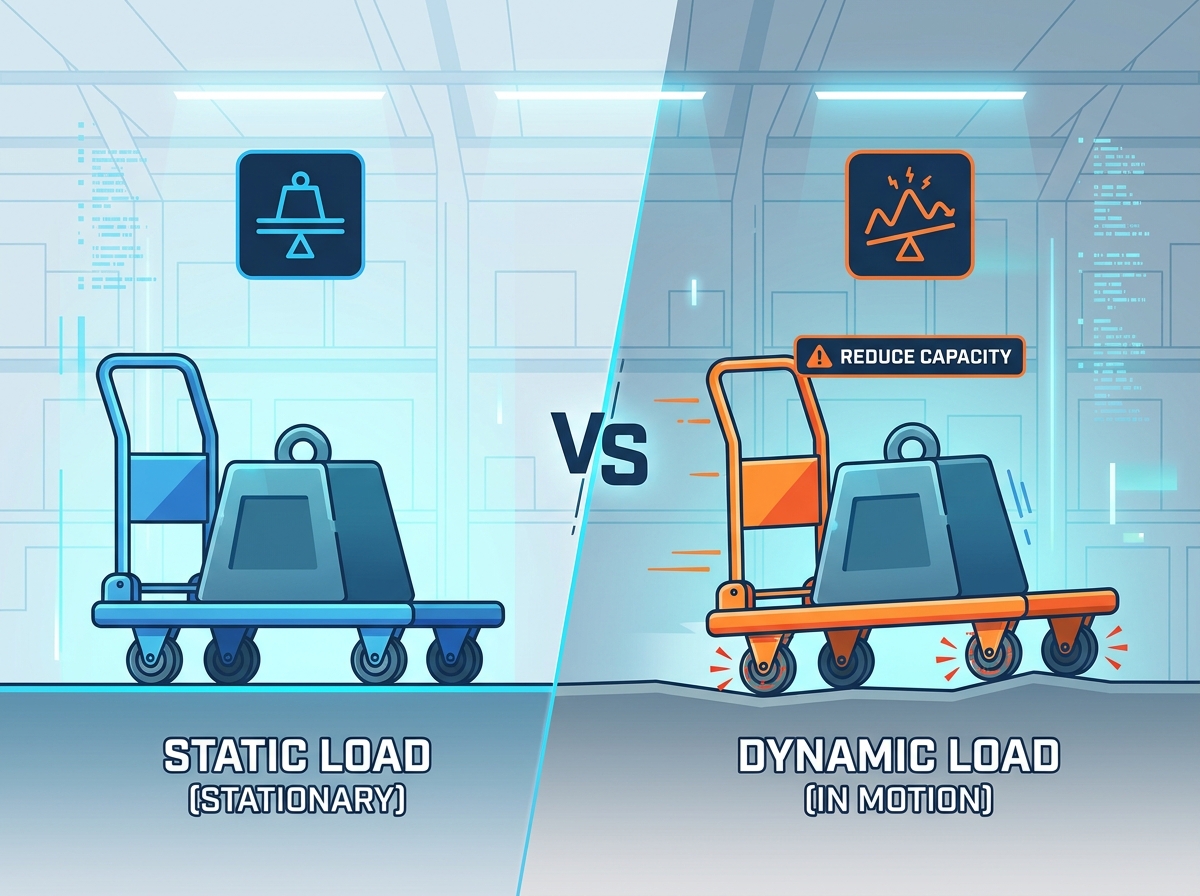
Understanding weight ratings prevents catastrophic equipment failure. Manufacturers often provide static weight limits. They calculate this by placing stationary weight on the deck in a controlled environment. However, real-world warehouses are dynamic spaces. Operators push heavy loads over expansion joints, dock plates, and debris. This motion generates kinetic energy. It multiplies the stress placed on the frame and wheels.
You must evaluate the dynamic load rating for safe active transport. Procurement teams should intentionally over-spec a heavy duty platform cart by 20 to 30 percent of the maximum expected daily load. This safety margin absorbs the shocks of uneven floors. It ensures structural integrity when workers suddenly stop or turn a fully loaded cart. Proper load calculations guarantee safety and extend the operational life of your fleet.
The platform deck serves as the foundation of your equipment. Different environments require specific material properties. You must balance durability, tare weight, and maintenance needs.
Steel and aluminum decks excel in industrial manufacturing. They handle abrasive loads, heavy machinery parts, and rough impacts easily. Steel offers maximum strength but increases the cart's tare weight. Aluminum provides a great balance. It resists corrosion while remaining relatively lightweight. However, metal decks can dent under severe impacts.
Structural plastic or resin decks fit perfectly in clean warehouse environments. These materials resist rust, chemical spills, and moisture. They remain lighter to push, reducing operator fatigue. High-density plastics avoid denting and operate more quietly than metal alternatives. They serve as excellent choices for food distribution, retail, and pharmaceutical facilities.
Material Suitability Guidelines
Material Type | Best Use Case | Key Advantages | Potential Drawbacks |
|---|---|---|---|
Heavy-Gauge Steel | Heavy manufacturing, automotive | Maximum load capacity, impact resistant | Heavy tare weight, prone to rust |
Aluminum | Aviation, commercial delivery | Corrosion resistant, lightweight | Higher initial purchase cost |
Structural Resin | Clean rooms, retail, food prep | Rust-proof, quiet operation, light | Lower maximum weight limits |
Many procurement managers overlook caster wheels. Yet, wheels act as the primary driver of warehouse material handling equipment longevity. They dictate how much physical effort workers must exert. They also determine floor protection levels and operational noise. Evaluating caster wheel materials is non-negotiable for an efficient facility.
The debate around rubber vs polyurethane wheels defines many purchasing decisions. Polyurethane (PU) wheels perform exceptionally well on smooth concrete. They offer high load capacities and very low rolling resistance. This means operators can push heavy loads using minimal effort. PU also strongly resists chemicals, oils, and metal shavings. These traits make PU the ideal choice for heavy duty platform carts.
Rubber wheels offer different operational benefits. They provide superior shock absorption. If your facility has uneven surfaces, rubber wheels cushion the load. They handle transitions over dock plates beautifully. Rubber operates quietly, improving the workplace acoustic environment. However, rubber requires more physical effort to start rolling when placed under heavy static loads.
Thermoplastic Rubber represents a highly effective middle-ground solution. TPR caster wheels combine the best traits of standard rubber and modern plastics. They offer excellent floor protection and significant noise reduction. They do not leave scuff marks on sealed warehouse floors.
TPR provides better overall durability than standard rubber. It also lowers the rolling resistance, meaning workers experience less fatigue. If you need a versatile wheel for mixed environments, TPR delivers outstanding daily performance.
Wheel material only solves half the equation. The internal bearings dictate maintenance schedules and rolling smoothness. Industrial caster wheels generally utilize either precision ball bearings or roller bearings.
Precision ball bearings offer the smoothest ride and lowest friction. Manufacturers often seal them, which keeps dust and debris out. Sealed bearings require zero maintenance. Roller bearings handle massive shock loads efficiently. They consist of a steel cage holding cylindrical rollers. Roller bearings usually feature grease fittings. You must lubricate them regularly to prevent premature wear. Choose sealed ball bearings for clean warehouses and greasable roller bearings for heavy manufacturing.
Ergonomics directly impact your bottom line. Strained workers move slower and risk injury. Thoughtful form factor design maximizes your material handling efficiency. You must evaluate handles, deck heights, and locking mechanisms carefully.
You can choose between fixed and folding handle configurations. Fixed handles offer superior rigidity. When an operator pushes a heavy load, a fixed handle transfers that energy directly to the chassis. There is zero lost motion. This stability is critical for heavy industrial applications.
Folding handles save valuable storage space. They allow you to stack carts in tight utility closets or delivery trucks. However, folding mechanisms introduce a mechanical hinge point. In high-volume bulk fleet usage, hinges can wear out or snap. Reserve folding handles for lighter duties and choose fixed handles for demanding daily routes.
The distance between the floor and the cart deck matters immensely. Evaluate how the deck height interfaces with your existing infrastructure. Does it match your conveyor systems? Does it align smoothly with your sorting tables? Eliminating vertical lifting gaps speeds up workflows significantly.
Proper deck height respects the operator’s physical biomechanics. It reduces bending and strenuous lifting injuries. A well-matched warehouse platform trolley keeps repetitive lifting strictly within the ergonomic "strike zone" between the knees and shoulders.
Safety demands reliable braking mechanisms. Standard wheel brakes only stop the wheel from rolling. Total-lock casters provide superior security. They lock both the wheel rotation and the swivel bearing simultaneously.
Total-lock systems are essential for loading and unloading on inclined surfaces. They prevent the cart from drifting away from sorting stations. Ensuring at least two casters feature total-lock mechanisms is a standard best practice for warehouse material handling.
Deciding where and how to purchase your equipment defines fleet reliability. You must choose whether to buy standard catalog items or invest in custom engineering. Sourcing directly from a platform trolley manufacturer often yields the best long-term results.
Standard carts work for most distribution centers. However, certain triggers necessitate a custom platform trolley. Analyze your workflows to identify these specific needs.
Non-standard load dimensions: Moving long pipes or oversized panels requires specialized deck shapes.
Localized compliance: Electronics manufacturing requires electrostatic discharge (ESD) compliant materials to prevent component damage.
Specialized racking: You may need custom brackets to secure specific totes, screens, or diagnostic equipment during transit.
Custom engineering solves unique operational bottlenecks. It integrates the cart flawlessly into your proprietary processes.
Partnering with a reliable platform trolley supplier protects your investment. You need more than just a vendor; you need a manufacturing partner.
Look strictly for quality assurance indicators. Reputable manufacturers hold ISO certifications. They readily provide transparent load-testing documentation. This paperwork proves their equipment meets stated safety claims.
Evaluate your wholesale platform trolley suppliers based on supply chain reliability. Ask about their standard lead times. Inquire about their discount structures for a bulk platform trolley order. Most importantly, verify their replacement parts availability. A trusted supplier keeps spare casters and handles in stock.
Finally, scrutinize the service level agreement (SLA) and warranty. Differentiate between comprehensive fleet warranties and limited defect-only coverage. A strong warranty demonstrates the manufacturer's confidence in their product.
Deploying new equipment requires strategic planning. Successful integration goes beyond the initial purchase order. You must implement strategies that keep the fleet running smoothly for years. Smart management of your warehouse transport equipment ensures uninterrupted facility operations.
Standardizing your fleet provides immense operational benefits. Avoid buying mismatched carts from various random suppliers. Instead, commit to a unified platform design across your facility.
Standardization minimizes your spare parts inventory. When you standardize a single caster bolt pattern, your maintenance team only needs to stock one specific replacement wheel. This eliminates confusion and reduces downtime. It allows mechanics to swap parts interchangeably across the entire fleet of an industrial platform trolley deployment.
Even the toughest carts require scheduled care. Implement strict maintenance protocols to prevent sudden breakdowns. Routine inspections keep equipment safe and operators happy.
Lubrication: Set a schedule for greasing roller bearings and swivel races. Monthly greasing prevents metal-on-metal wear.
Wheel Inspections: Inspect polyurethane wheels for flat-spotting regularly. Debris can embed into TPR wheels, causing floor damage if left unchecked.
Hardware Checks: Vibrations loosen bolts over time. Have your team tighten handle brackets and caster mounting plates quarterly.
Never place a massive facility-wide order blindly. Always request or purchase a small sample batch first. A pilot test allows your actual warehouse workers to evaluate the equipment.
Let your team test the carts on your specific floors. See how the wheels handle your dock plates. Gather direct feedback from the operators pushing the loads. This practical trial reveals structural quirks before you commit to a massive bulk order from your supplier. Pilot testing is the ultimate safeguard against procurement errors.
Finding the perfect platform cart for warehouse operations depends entirely on your specific environment. The "best" cart is highly contextual. It must align perfectly with your facility's floor type, load profiles, and daily worker workflows. Generic solutions often fall short under industrial stress.
We encourage procurement teams to prioritize caster wheel selection and structural ergonomics. Partnering with a proven manufacturer ensures reliability and consistent quality. By focusing on durability and maintenance-friendly designs, you significantly improve fleet longevity and safeguard your daily operations.
Take action today by auditing your current transport equipment. Identify where your workers struggle most. Once you spot the operational bottlenecks, contact a verified manufacturer for a detailed spec sheet consultation to upgrade your fleet properly.
A: Polyurethane (PU) is the optimal choice for heavy loads on smooth concrete. It offers high load capacity and very low rolling resistance. If acoustics or small debris are major concerns in your facility, TPR (Thermoplastic Rubber) provides a quieter ride while protecting the concrete surface from scuffs.
A: Folding handles introduce a mechanical hinge point that creates structural vulnerability under extreme stress. While they save space, hinges can bend or wear out during continuous heavy usage. For load profiles exceeding 1,000 lbs in industrial settings, we strongly recommend rigid, fixed-handle configurations for maximum safety.
A: Always rely on a dynamic rating rule of thumb. Take your maximum expected daily load and add a 20-30% safety buffer. Furthermore, calculate capacity by dividing the total load safely across just three of the four casters, as uneven floors often lift one wheel off the ground.
A: Purchasing directly from a manufacturer ensures rigorous quality consistency and better warranty support. It guarantees access to standardized replacement components like matching casters. Working directly also eliminates multi-tier distribution markups, giving you better access to custom engineering modifications when necessary.


