


Views: 0 Author: Site Editor Publish Time: 2026-05-29 Origin: Site


Replacing or upgrading equipment caster wheels appears deceptively simple until a 2,000 lb. cart becomes impossible to push, damages expensive epoxy flooring, or suffers a catastrophic failure. Many facility managers view these components as basic hardware. However, a poor choice quickly halts production lines and introduces severe workplace hazards. Choosing the right hardware involves complex physics.
Selecting the right caster requires balancing load distribution realities, environmental extremes, and ergonomic maneuverability. You cannot just guess the equipment weight and pick the cheapest option available. You must evaluate how dynamic forces act upon the wheels during movement. Real-world conditions like cracked concrete, harsh chemicals, and extreme temperatures destroy inadequate materials rapidly.
This guide breaks down the engineering principles and physical realities required to specify the correct caster wheels for industrial and commercial equipment without overspending or compromising safety. We explore everything from calculating actual dynamic loads to selecting proper tread materials. You will learn how to optimize maneuverability and choose secure locking mechanisms. By the end, you will understand how to evaluate your facility environment properly.
Use the N-1 Rule: Always calculate load capacity assuming one wheel is off the ground due to uneven floors.
Match Material to Floor: Hard wheels belong on soft floors; soft wheels belong on hard floors to prevent damage and reduce rolling resistance.
Locking Matters: For stationary stability (like workbenches), "Total Lock" brakes are required to prevent swivel offset ("swim around").
Environment Dictates Internals: Extreme temperatures require specialized bearing grease and materials—standard wheel setups will freeze or melt.
Many procurement teams make a dangerous mistake when calculating load requirements. They take the total weight of the cart, add the payload, and simply divide it by four. This basic division ignores the realities of industrial environments. Floors are rarely perfectly flat. Facility surfaces feature expansion joints, slopes, cracks, and debris. These imperfections frequently create a "three-point contact" scenario.
When a four-wheel cart hits a high spot or a small threshold, one wheel often floats slightly above the ground. At that exact moment, the remaining three wheels bear the entire weight of the payload. If you specified your wheels by dividing the total weight by four, those three active wheels instantly suffer a massive overload. This overload causes sudden bearing failure, cracked hubs, and dangerous cart tipping.
To ensure safety, engineers universally apply the "N-1" load calculation rule. You calculate the required capacity assuming one wheel is entirely out of the equation.
Determine the precise empty weight of the equipment or cart.
Determine the absolute maximum payload you will place on the cart.
Add these two numbers together to find the gross weight.
Divide the gross weight by 3 (for a standard 4-wheel cart).
The resulting number dictates the minimum safe load rating for each individual wheel. However, static weight is only half the battle. You must also factor in dynamic loads and safety multipliers. Movement introduces kinetic energy. Wear increases exponentially based on how operators move the equipment. Specifying heavy duty caster wheels requires understanding these multipliers.
Indoor manual push operations represent the gentlest usage. A person walking at three miles per hour generates predictable stress. This scenario typically requires a safety factor of 1.35. Power-towed or outdoor applications demand a much higher safety multiplier. Tow motors drag carts at higher speeds over rougher terrain. The continuous vibration and high-speed impacts multiply the stress on the internal bearings. You must apply a safety multiplier of 2.0 to 3.0 for power-towed environments.
| Application Type | Speed Limit | Terrain Profile | Required Safety Multiplier |
|---|---|---|---|
| Indoor Manual Push | < 3 MPH | Smooth Concrete / Tile | 1.35x |
| Outdoor Manual Push | < 3 MPH | Asphalt / Gravel / Cracks | 1.80x |
| Indoor Power-Towed | 3 - 5 MPH | Smooth Concrete / Ramps | 2.00x |
| Outdoor Power-Towed | > 5 MPH | Rough Terrain / Thresholds | 3.00x |
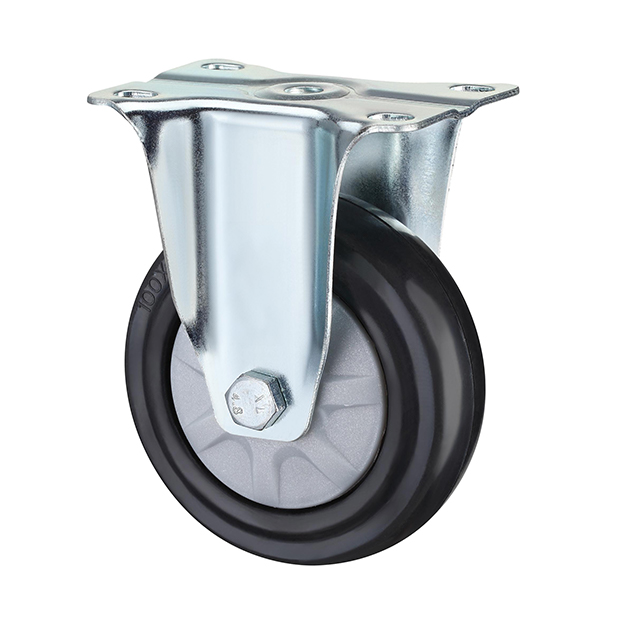
Aligning your wheel materials with facility realities prevents massive asset damage. A single poorly specified cart can ruin thousands of dollars of premium flooring in a matter of days. You must follow the fundamental floor protection principle. Hard wheels belong on soft floors. Soft wheels belong on hard floors.
Hard treads like nylon, cast iron, or forged steel roll easily over carpet. They also handle rough outdoor terrain without chewing apart. Conversely, softer treads like polyurethane or thermoplastic rubber belong on smooth, hard surfaces. Using them on tile, polished concrete, or expensive epoxy floors prevents scratching. Soft materials also reduce rolling noise significantly. Selecting the right industrial caster wheels requires balancing this rule against environmental extremes.
Extreme environments hide multiple pitfalls for buyers. Cold storage and commercial freezers destroy standard wheels quickly. Many buyers specify a cold-resistant plastic wheel but forget the internal components. Standard bearing grease freezes solid in sub-zero temperatures. When the grease freezes, the wheel locks up. Operators then drag a locked wheel across the freezer floor, grinding the tire flat. You must specify "freezer-grade" synthetic grease. Pair this grease with Polyolefin wheels to guarantee continuous rolling.
High-heat environments present the opposite threat. Industrial ovens and autoclaves melt standard polyurethane instantly. You should use glass-filled nylon, high-temp epoxy resins, or cast iron for high-heat zones. However, you must carefully monitor floor transitions. Never use steel wheels in high-heat areas if the facility has adjacent epoxy floors. Steel absorbs massive amounts of heat inside the oven. When operators roll the hot cart onto the epoxy floor and park it, the steel acts like a branding iron. The heat transfer scorches and ruins the flooring permanently.
Chemical and debris exposure also dictates material choice. Facilities heavily contaminated with metal shavings, aggressive solvents, or continuous moisture require distinct upgrades. Metal shavings embed themselves into soft rubber wheels, turning them into abrasive sanders that destroy floors. Solvents dissolve standard rubber compounds. For these environments, specify chemical-resistant polyurethane treads. Always combine them with sealed bearings to prevent moisture and fine debris from infiltrating the rolling mechanisms.
Workers frequently complain about carts being "hard to push." This subjective pain point traces directly back to physical mechanics. Understanding maneuverability requires breaking it down into two physics concepts. Starting resistance is the effort required to get a stationary cart moving. Rolling resistance is the effort required to keep it moving. Both forces exhaust operators and cause musculoskeletal injuries.
Material hysteresis impacts operator fatigue heavily. Hysteresis refers to the compression and rebound of the tire material as it rolls. When heavy loads press down, a soft tire flattens against the floor. As the wheel rolls forward, that flattened section must rebound to its original shape. If the material rebounds too slowly, the wheel effectively pushes against its own deformed tire. The operator ends up pushing "uphill" constantly. High-rebound polyurethane minimizes this effect, offering lower rolling resistance than standard rubber.
Sizing the wheel diameter is another critical ergonomic step. Large diameters roll over debris, cracks, and thresholds easily. They bridge gaps in the floor without dipping. This minimizes sudden shocks and reduces overall ergonomic strain. A larger wheel requires significantly less starting effort. Small diameters provide a different advantage. They offer a lower center of gravity. This prevents tall, top-heavy equipment from tipping over during transit. However, small wheels catch on every crack. They require far more effort to push over uneven surfaces.
The role of swivel lead, or offset, is equally critical for maneuverability. Offset is the horizontal distance from the swivel pivot point (the vertical kingpin) to the center of the wheel axle. This measurement dictates turning ease. A longer offset provides more leverage. It drastically reduces swivel resistance, making it easier for the operator to change directions. The trade-off is a larger sweep radius. The wheel assembly swings wider when pivoting. If you need tight maneuverability in small aisles, you must carefully specify swivel caster wheels with the correct offset to avoid hitting nearby equipment.
Mounting selections and wheel configurations dictate how equipment behaves under stress. You must finalize these details during the decision stage to ensure maximum stability. The two primary mounting types serve vastly different applications. Plate-mount is the undisputed standard for industrial and heavy-duty load distribution. A steel top plate spreads the payload across four separate bolts, securing it firmly to the equipment frame. Stem-mount configurations are reserved for medical carts, food service racks, or lighter equipment featuring pre-engineered metal tubing. Stems insert directly into the tube legs, offering a clean profile but lower overall weight capacity.
Choosing the optimal wheel configuration defines your daily operation. Industry standards strongly recommend a combination of two rigid and two swivel casters. You install the rigid wheels at the rear and the swivel wheels at the front. This provides the best balance of straight-line tracking and cornering maneuverability. Operators steer from the swivel end, pushing the cart down long hallways effortlessly.
Alternatively, the "4 Swivel" configuration provides maximum lateral movement. You can push the cart entirely sideways. This setup proves invaluable in tight spaces, crowded machine shops, or narrow hospital rooms. The trade-off involves straight-line control. A cart with four swivels tends to drift constantly on long runs. Operators must fight to keep the cart moving perfectly straight, which increases fatigue. Understanding these trade-offs ensures you match equipment caster wheels to your specific hallway lengths and corner angles.
Braking systems represent the final stability check. You must choose between wheel locks and total locks based on your precision requirements. A standard wheel lock only stops the physical wheel from rolling forward or backward. The swivel rig, however, remains free to rotate around the kingpin. If someone leans against the cart, the equipment can still shift an inch or two as the rig pivots. We call this shifting "swim around."
A total lock eliminates this problem. When you engage a total lock, it clamps down on the wheel rotation and the swivel rig simultaneously. The entire assembly becomes completely rigid. You must frame total locks as a non-negotiable requirement for heavy machinery, mobile workbenches, and precision testing equipment. When workers use power tools or calibrate instruments on a mobile table, eliminating swim around prevents catastrophic errors and injuries.
Moving toward a final purchase requires strict attention to detail. Procurement teams often fall into predictable traps that ruin operational budgets. You can easily avoid these common specification mistakes by auditing your environment thoroughly before ordering.
Underestimating load capacity remains the most frequent error. Buyers focus intensely on the weight of the raw materials but completely ignore the weight of the heavy steel cart itself. Always weigh the entire empty assembly first. Another massive mistake involves upgrading towing methods without upgrading the wheels. If a facility transitions from manual pushing to tugger trains, the old wheels will disintegrate under the new towing speeds. You must upgrade to power-rated treads and heavy-duty rigs immediately.
Ignoring routine maintenance also leads to premature bearing failure. Heavy-duty assemblies require strict lubrication schedules. Dust, floor chemicals, and water constantly attack the kingpin grease. If maintenance teams never lubricate the fittings, the bearings grind to a halt long before the tire tread wears out.
Gathering exact data before contacting a supplier speeds up the quoting process. Use the following checklist to ensure a smooth caster wheel selection process. Having these precise measurements prevents costly returns and operational delays.
Top Plate Dimensions: Measure the exact length and width of the mounting plate.
Bolt Hole Spacing: Measure from the center of one bolt hole to the center of the adjacent hole. Do this for both length and width.
Hardware Diameter: Measure the thickness of the mounting bolts you intend to use.
Overall Height: Measure from the floor to the top of the mounting plate. This ensures your cart remains level if you are only replacing one side.
Do not guess these dimensions. A fraction of an inch difference in bolt hole spacing means the new plate will not fit your existing equipment frame.
Caster wheel selection is never a simple procurement afterthought. It is a critical engineering decision that directly impacts worker safety, floor maintenance budgets, and daily operational efficiency. Ignoring the physical realities of dynamic loads and floor conditions guarantees rapid equipment failure. By matching tread materials to your specific floor type, you prevent expensive surface damage and reduce operator strain.
Before committing to a purchase, you must physically audit your specific environment. Check your floor roughness, record the temperature extremes, and measure your maximum tow speeds. Always apply the N-1 rule to guarantee your load capacity covers uneven terrain safely. Make sure you upgrade to total locks for any stationary workbenches to eliminate dangerous swivel offset.
Take action today by reviewing your heaviest carts. Consult with a material handling specialist or access a technical product catalog with your calculated load requirements in hand. Proper specification upfront saves thousands of dollars in replacement costs and prevents severe workplace injuries.
A: Polyurethane offers higher load capacities and exceptional wear resistance. It easily rolls over smooth floors and resists chemicals. Rubber provides superior shock absorption, making it ideal for rough terrain. Rubber also rolls much quieter than polyurethane, though it generally supports less weight and degrades faster when exposed to industrial solvents.
A: Start by measuring the wheel diameter across the center of the tire. Next, measure the tread width across the flat rolling surface. For plate-mount versions, measure the outer length and width of the metal top plate. Finally, measure the exact distance between the centers of the bolt holes.
A: High-speed wobbling, known as "flutter," occurs when the towing speed exceeds the caster's engineered rating. Flutter is also caused by an insufficient swivel offset or severely worn swivel bearings. If flutter occurs, you must reduce speeds immediately or upgrade to power-towed rigs with tighter tolerances and longer swivel leads.


