


Views: 0 Author: Site Editor Publish Time: 2026-06-04 Origin: Site


Choosing the wrong size for your mobility components often causes severe operational bottlenecks. It directly leads to ergonomic strain, damages expensive equipment, and causes frustrating obstacle clearance failures on the shop floor. When you design or upgrade carts, the physical dimensions dictate both the storage footprint and dynamic rolling performance.
A properly specified unit balances load capacity, minimizes rolling friction, and maintains optimal equipment height. It achieves all this without compromising user safety or load stability. We built this guide to provide a highly technical, evidence-based framework for your evaluation process. You will learn the core physics of rolling resistance, understand the nuances of swivel clearance, and discover how to assess various floor conditions. By following these steps, you will confidently pick the exact specifications your operational environment demands.
Larger equals easier: As wheel diameter increases, rolling resistance decreases, requiring less physical exertion to initiate and maintain movement.
The "Divide by 3" safety rule: When calculating required load capacity per wheel, divide the total equipment weight by 3 (not 4) to account for uneven floors where only three wheels bear the load.
Obstacle clearance: A caster wheel can generally only roll over obstacles that are less than 10-15% of its total diameter.
Overall Height (OAH) matters: Upgrading to a larger wheel increases the total height of the cart or equipment, which impacts ergonomics and center of gravity.
Proper caster diameter selection relies entirely on physics. We must evaluate how a circular object interacts against a flat surface under heavy gravitational loads. You cannot optimize a cart without understanding these underlying mechanics.
Wheel size shares an inverse relationship against rolling friction. Larger wheels distribute heavy payloads over a much wider footprint. This broad distribution minimizes floor deflection. When a wheel avoids sinking into a softer floor material, it requires far less energy to initiate movement. Operators experience significantly less physical strain when pushing carts equipped properly. A smaller wheel concentrates the entire load into a tiny contact patch, creating a deep depression. Pushing it out of this depression demands massive initial exertion.
Diameter directly impacts the angle of approach. Think about how a wheel strikes a solid object on the floor. Small wheels hit debris near their horizontal center line. This geometry causes them to wedge violently against obstacles, stopping carts instantly. Larger diameters strike obstacles lower on their curvature. They climb and roll over cords, metal dock plates, and wide floor joints effortlessly. If your facility has uneven transitions, upsizing remains the best defense against abrupt stalls.
Upgrading size introduces a specific spatial trade-off. Larger wheels demand a wider swivel envelope to rotate freely 360 degrees. If you install oversized units onto a narrow cart chassis, they might collide during rotation. They can strike the cart frame, lock up, and cause accidents. You must measure the clearance underneath the mounting plate. Carts operating in tightly confined warehouse aisles need an optimal balance between rolling ease and a compact turning radius.
| Diameter | Relative Push Effort (Smooth Floor) | Max Obstacle Clearance (Approx. 10%) |
|---|---|---|
| 3 Inches | High | 0.30 Inches |
| 4 Inches | Medium | 0.40 Inches |
| 5 Inches | Low | 0.50 Inches |
| 6+ Inches | Very Low | 0.60+ Inches |
You cannot buy components based on aesthetics or guesswork. You must evaluate the operational environment. Using a structured framework prevents costly replacement cycles and ensures safety compliance.
Industry standards dictate a specific formula for load calculations. You take the total cart weight, add the maximum expected payload, and divide by three. You divide by three instead of four because floors are rarely perfectly flat. A rigid cart often lifts one corner over bumps, forcing the remaining three points to bear the entire load. While larger diameters naturally handle heavier dynamic weights, material density matters equally. A massive, soft rubber tire might carry less weight than a tiny, forged steel roller. Always cross-reference the equipment caster size against the specific material load rating.
Your facility flooring dictates the baseline dimension requirements.
Smooth, indoor concrete: This pristine environment allows for smaller, harder wheels. You face few obstacles, so minimal clearance works fine.
Outdoor, uneven, or debris-heavy terrain: Asphalt, gravel, and damaged concrete require substantial upgrades. Small wheels easily lodge into cracks. You need larger diameters to prevent continuous stalling and severe impact damage to the wheel bearings.
Assess how far and how often operators move the carts. Short travel distances or infrequent movements tolerate smaller units. However, continuous manual transport along long manufacturing lines requires a different approach. You must prioritize larger wheels to maintain momentum. Following workplace safety guidelines (such as OSHA push/pull limits) protects employees from musculoskeletal injuries. Larger wheels keep starting forces well below dangerous thresholds.
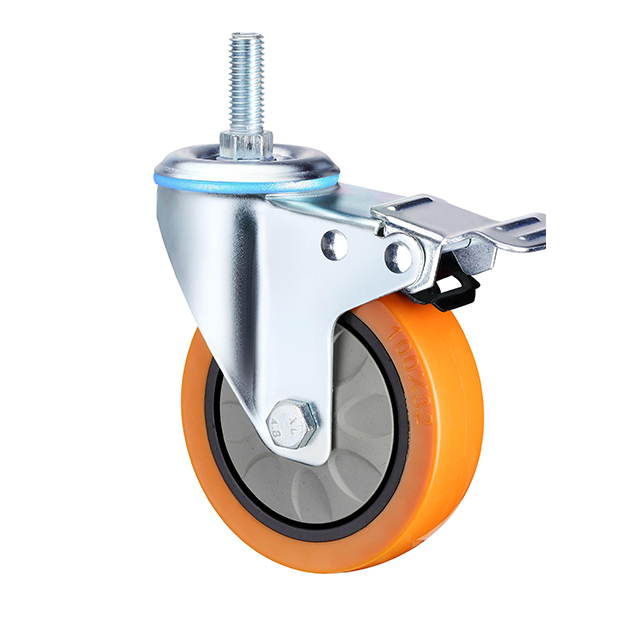
Navigating the various standard dimensions requires understanding the unique performance profiles of each category. Let us break down the most common specifications found in commercial and industrial settings.
These compact units dominate light-duty applications. You typically find 3 inch caster wheels on office furniture, rolling medical IV stands, and light retail display racks. They perform adequately on exceptionally smooth institutional floors.
However, they carry significant limitations. They perform poorly over elevated thresholds, thick carpets, or uneven tile grout lines. Their low ground clearance traps carts against minor debris. You should strictly avoid them for heavy manual material handling.
This dimension serves as the standard industry median. Heavy woodworking workbenches, medium-duty commercial utility carts, and standard bakery racks rely heavily on 4 inch caster wheels. They offer a highly versatile performance profile.
They strike an excellent balance between maintaining a manageable overall equipment height and providing adequate obstacle clearance. They easily navigate minor floor debris, thick expansion joints, and standard elevator gaps. If you feel unsure about your exact needs, this middle ground often provides the safest baseline.
Industrial environments demand extreme ruggedness. Heavy-duty material handling systems, industrial platform trucks, and tow-line operations utilize 5 inch caster wheels or larger variants. These deliver maximum ergonomic benefits for continuous use.
The performance profile excels at aggressive obstacle clearance. Operators can push heavy loads across warehouse floors with minimal friction. However, you face notable trade-offs. The increased dimension raises your equipment's center of gravity. Furthermore, they require significantly larger mounting plates and wider clearance zones under the cart frame.
Replacing failed mobility hardware requires absolute precision. Guessing the caster wheel size leads to uneven carts, unbalanced load distribution, and dangerous tipping hazards. Follow this exact process to gather accurate specifications.
Measuring Wheel Diameter: Lay the cart on its side or elevate it securely. Measure straight across the circular face of the wheel from outer edge to outer edge. Do not include the metal rig or the fork housing in this measurement. Use rigid calipers for the most accurate reading.
Measuring Overall Height (OAH): Measure vertically from the very bottom of the tire resting on the floor up to the top surface of the mounting plate. If you have a stem mount, measure to the base of the stem. OAH remains crucial for ensuring your equipment stays perfectly level after replacement.
Measuring Wheel Width: Measure the thickest part of the tread. A wider tread provides more surface area for weight distribution but inherently increases turning friction. You must accurately match the new width to the existing yoke or fork to prevent binding.
Even experienced maintenance teams make critical errors during procurement. Upgrading hardware without analyzing the whole system introduces severe workplace risks.
Many engineers wrongly assume bigger is always better. Upsizing an original 3-inch component to a massive 6-inch unit physically lifts the entire cart three inches higher. This dramatically shifts the center of gravity upward. If you operate tall, narrow carts, this modification makes them dangerously top-heavy. They become highly prone to tipping during sharp turns or sudden stops.
Two wheels measuring five inches across will behave completely differently based on their tread shape. A flat-tread profile drags heavily during swivel rotation because a massive patch of material grinds against the floor. Conversely, a donut-tread (crowned) profile mimics a smaller contact patch, offering incredibly smooth turns. You must pair the overall dimension with the correct profile shape for your specific pushing requirements.
You cannot simply bolt massive components onto flimsy cart frames. People frequently assume they can retrofit a heavy-duty wheel onto a tiny existing mounting plate. Larger configurations require appropriately rated steel rigs. They also feature wider bolt-hole spacing patterns. Always verify the cart base has enough structural integrity to accept the wider bolt pattern required by an upsized rig.
Your operational success depends heavily on getting these dimensions right. You should default to the largest diameter your equipment's height restrictions and budget will allow. Doing so reliably maximizes workplace ergonomics and extends the longevity of your mobility hardware.
Follow a strict shortlisting logic. Determine your total maximum load capacity first. Next, assess your facility's floor conditions and environmental hazards. Set firm maximum height restrictions to keep the center of gravity safe. Finally, finalize the exact diameter that satisfies all prior constraints.
Review your fleet today. Inspect your current carts, identify difficult mobility bottlenecks, and browse specific equipment categories by dimension. For highly customized OEM applications, consult directly with a structural sales engineer to specify the perfect fit.
A: Base this choice entirely on your facility's threshold heights and typical push distances. If operators push heavy loads across metal dock plates or traverse massive warehouse floors all day, upgrade to the 5-inch option. For relatively stationary workbenches or localized movement, 4-inch components prove completely sufficient.
A: Yes. Larger diameters generally house robust, oversized bearings and feature thicker tread material. This combination yields higher baseline load ratings. However, you must remember the physical material density (such as forged steel versus soft pneumatic rubber) remains the primary driver of actual weight limits.
A: You need a minimum of 5 to 6 inches for basic outdoor tasks. Preferably, specify 8 inches or larger. Using pneumatic air-filled tires or solid polyurethane treads helps operators navigate rough gravel, hot asphalt, and soft grass without sinking into the terrain.
A: OAH is always significantly larger than the bare wheel diameter. It typically measures 1.5 to 2 inches taller. This extra height accounts for the metal mounting fork thickness and the internal swivel bearing raceway. You must always check manufacturer specification sheets to confirm the exact OAH.


