


Views: 0 Author: Site Editor Publish Time: 2026-06-11 Origin: Site


Industrial casters are not merely commodity hardware. They are highly engineered components critical to operational uptime. They protect workplace safety and ensure equipment longevity across diverse sectors. Many facilities mistakenly treat them as simple afterthoughts. Defaulting to "off-the-shelf" wheels without evaluating specific use cases creates serious operational risks. It often leads to premature wheel failure. You may experience expensive floor damage and severe ergonomic injuries among your workforce. We see this happen frequently in fast-paced manufacturing environments. Poor mobility disruptions can literally halt entire production lines.
Our goal is to fundamentally change how you view these vital components. We will provide a comprehensive decision-stage framework. It will help you navigate different industrial caster applications effectively. You will learn how to match wheel materials to harsh environmental demands confidently. Ultimately, this guide helps you shortlist the exact mobility solutions needed for your facility. You will protect your floors, safeguard your employees, and maximize your operational efficiency.
Industrial casters are purpose-built for specific sectors; selecting the wrong type drastically increases Total Cost of Ownership (TCO) through frequent replacements and downtime.
Evaluating load capacity requires accounting for dynamic forces and uneven flooring, not just static weight.
Upgrading to application-specific, heavy duty industrial casters directly improves ergonomic compliance and reduces employee push/pull strain.
Shortlisting requires auditing three core dimensions: load requirements, environmental hazards (chemicals, heat, debris), and specific mobility workflows.
We must think far beyond the initial purchase price. Investing in properly engineered industrial casters drastically reduces your long-term maintenance cycles. Cheap wheels fail faster. They require constant replacement. This drains your maintenance budgets. It also pulls skilled technicians away from critical machinery repairs. You lose valuable time every time a cart breaks down.
Consider the massive impact of sudden wheel failure. A broken rig on a continuous manufacturing line stops production instantly. Automated guided vehicle (AGV) routes rely entirely on precise mobility. If a cart drifts slightly due to a failing bearing, AGV sensors detect the anomaly. They will halt the entire system immediately. These specific operational bottlenecks cost facilities thousands of dollars per minute in lost output.
Poor mobility also carries hidden ergonomic costs. Workers suffer fatigue-related errors when pushing stubborn carts constantly. In severe cases, they sustain chronic musculoskeletal injuries. Industry watchdogs closely monitor manual push and pull safety thresholds. Upgrading your wheels directly ensures ergonomic compliance. It protects your team on the floor. It also shields your company from costly workers' compensation claims.
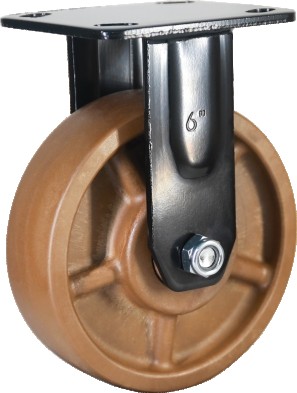
Different industries require highly specialized mobility solutions. You cannot apply a universal approach. We categorize these specific mobility needs into distinct operational sectors to simplify selection.
Heavy fabrication facilities rely entirely on dedicated manufacturing equipment casters to maintain workflow velocity.
Use Case: Operators use them for moving assembly line jigs, heavy stationary machinery, and continuous towlines across concrete floors.
Success Criteria: They demand extremely high load capacity. The wheels must resist metal shavings, sharp debris, and constant friction. They need to handle continuous 24/7 duty cycles without bearing degradation or frame warping.
Logistics hubs and distribution centers face entirely different operational challenges.
Use Case: Teams deploy them on order picking carts, bulk platform trucks, and high-speed mechanical towing chains.
Success Criteria: Selecting proper warehouse caster wheels is vital. They require incredibly low push/pull resistance. You must choose non-marking materials to guarantee floor protection. Tight turning radii are absolutely essential for navigating narrow storage aisles safely.
These massive manufacturing sectors push mobility equipment to the absolute physical limit.
Use Case: Facilities use them for massive engine stands, complete chassis transport, and heavy drop-forging equipment movement.
Success Criteria: They require extreme weight bearing capabilities above standard limits. Shock absorption is critical to protect sensitive aerospace components from vibrations. Thick forged steel construction offers the highest survival rate in these brutal environments.
Sanitation completely outweighs extreme load capacity in these strictly regulated environments.
Use Case: Staff utilize them for washdown carts, pharmaceutical processing lines, and sterile sanitary transport.
Success Criteria: Rigs must feature high-grade stainless steel construction. Antimicrobial polyurethane wheels help prevent dangerous bacterial growth. The entire unit must resist harsh chemical solvents and daily high-pressure washing procedures.
You cannot select wheels based purely on physical dimensions or visual appearance. Evaluating material handling casters requires a scientific approach to forces, friction, and environmental exposure.
Never trust static load ratings alone. Facilities rarely feature perfectly smooth floors. Rolling over expansion joints or thresholds creates intense dynamic shock loads. These sudden impacts multiply the actual force exerted on the wheel. We always recommend using the industry-standard safety formula:
Required Capacity Per Caster = (Total Cart Weight + Max Expected Load) / 3
Dividing by three directly accounts for uneven floors. It safely assumes only three wheels will touch the ground during a severe bump. This prevents catastrophic rig collapse.
Choosing the right tread material determines overall rolling performance and floor survival.
| Wheel Material | Ideal Use Case | Key Advantages | Drawbacks |
|---|---|---|---|
| Polyurethane | Warehouses, clean concrete floors | Protects floors, provides excellent grip, ensures noise reduction. | Can degrade quickly in high heat or humid environments. |
| Forged Steel / Cast Iron | Heavy manufacturing, metal foundries | Maximum weight capacity, survives brutal conditions effortlessly. | Highly unforgiving on floors, generates significant rolling noise. |
| Nylon / Phenolic | Chemical processing, automotive plants | High load capacities, strongly resists oils and harsh chemicals. | Can chip easily on rough concrete or steel thresholds. |
Bearings dictate exactly how much physical effort it takes to initiate movement. Precision ball bearings are excellent for operator ergonomics. They minimize startup friction. They make manual pushing much easier. Conversely, tapered roller bearings serve a completely different purpose. They absorb extreme horizontal and vertical shock loads. We use them primarily for heavy automated towing sequences where speed and impact are constants.
You need reliable stopping power to maintain facility safety. Tread locks apply friction directly to the wheel face. Total locks offer far superior stability. They freeze both the wheel rotation and the swivel rig simultaneously. This turns a mobile cart into a stationary workbench. Directional locks convert swivel casters into rigid ones temporarily. This provides excellent steering control down long, narrow hallways.
Even the best equipment fails rapidly if applied incorrectly. Watch out for these common implementation pitfalls across your facility.
Never replace just one caster on a cart with a mismatched material. A slightly different tread height shifts the entire weight load unevenly. This completely ruins cart stability. It accelerates physical wear on the remaining older wheels. Always replace wheels in complete sets to ensure level load distribution.
Retrofitting old equipment requires exact measurements. You must match top plate dimensions perfectly. Bolt hole patterns must align exactly with the existing cart chassis. Stem types—whether threaded, grip ring, or expanding—must fit snugly into the mounting tube. Loose mountings sheer off violently under heavy dynamic loads.
Honestly evaluate your maintenance capacity. Greasable fittings require strict preventative maintenance schedules. If you miss a scheduled greasing cycle, the bearing fails. In high-debris environments, we strongly prefer maintenance-free sealed precision bearings. They lock dirt out permanently. They save hundreds of labor hours annually.
Chemicals and extreme temperatures destroy inappropriate materials rapidly. Never use standard rubbers in chemical plants. They will melt, swell, or dissolve. Do not deploy standard polyurethanes in extreme-heat industrial ovens. You must specify specialized high-temperature resins or cast iron for any thermal exposure.
Follow this proven chronological sequence to select reliable heavy duty industrial casters for your facility.
Conduct a Floor and Environment Audit: Walk your facility physically. Document the primary flooring type in detail. Note any expansion joints, ramps, or thresholds. Record daily chemical exposures and expected temperature extremes.
Define the Workflow: Determine the cart's primary propulsion method. Will workers push it manually? Prioritize ergonomics and precision ball bearings. Will an automated vehicle tow it mechanically? Prioritize heat dispersion and severe shock load resistance.
Calculate Precise Load Limits: Always apply the dynamic load safety factor. Determine the absolute minimum per-caster capacity using the divide-by-three rule mentioned earlier. Never round down.
Configure the Rig: Select the correct ratio of swivel to rigid formats. Two swivel and two rigid wheels provide excellent straight-line tracking. Four swivel wheels offer maximum maneuverability for incredibly tight, confined spaces.
Next-Step Action: Do not guess your needs. We highly recommend requesting a prototype. Test a single configured cart in your actual operating environment for a few weeks. For massive fleet-wide rollouts, always schedule an engineering consultation to verify your final selections.
Industrial mobility solutions demand a precise, evidence-based approach. You must match the wheel material and rig design directly to the workflow environment. Relying on guesswork leads to expensive mechanical failures. Selecting the right setup inherently improves workplace safety. It protects your expensive facility floors from severe gouging. Proper selection ensures continuous operational uptime by eliminating avoidable maintenance stops.
Take direct action today to optimize your cart fleet. Conduct a thorough floor audit immediately. Calculate your true dynamic load requirements accurately. We strongly encourage you to contact a mobility specialist for a comprehensive application review. You can also browse technical catalogs sorted by specific industry needs to find your ideal match confidently.
A: Standard types handle light loads on perfectly smooth floors. Heavy duty versions use much thicker forged steel rigs. They utilize reinforced kingpins and specialized bearings. They easily support thousands of pounds safely. They are built specifically to withstand severe dynamic shock loads and harsh industrial abuse without failing.
A: Replacement frequency depends entirely on daily usage and environment. Inspect them quarterly. Replace them immediately if you notice flat spots, severe tread tearing, or grinding noises in the swivel bearing. High-volume continuous environments often require strict annual replacements to maintain optimal pushing ergonomics.
A: High-grade polyurethane is usually the best overall choice. It grips smooth concrete exceptionally well while rejecting small debris. Polyurethane protects the concrete surface from scratches. It also rolls very quietly, significantly reducing background noise in busy logistics facilities.
A: Add the exact weight of your empty cart to the absolute maximum load it will carry. Divide that total combined number by three. This formula builds in a vital safety margin. It accounts for dangerous dynamic shock loads when rolling over uneven factory floors.
A: Absolutely not. Manual setups use bearings and tread compounds designed specifically for slow walking speeds. High-speed automated towing generates immense friction and excessive heat. This rapidly melts standard polyurethanes and shatters standard bearings. You must specify towline-rated equipment with tapered roller bearings.


