


Views: 0 Author: Site Editor Publish Time: 2026-07-02 Origin: Site


Procuring the wrong material handling equipment carries steep hidden costs. Premature caster failure halts throughput instantly. Incompatible wheels gouge expensive retail floors, leading to costly facility repairs. Poor ergonomics trigger devastating worker compensation claims that impact your bottom line. You must view the Platform Dolly as a critical operational asset, not just a simple slab of metal or plastic. In high-throughput environments, it acts as either a severe bottleneck or a powerful enabler. A well-specified unit keeps inventory flowing effortlessly from the loading dock to the retail floor. A poor choice causes daily friction, slows down workers, and damages goods. This article provides a comprehensive, vendor-agnostic framework for evaluating, comparing, and sourcing the exact equipment required for specific operational realities. You will learn how to navigate complex technical specifications. You will discover how to align equipment perfectly with environmental demands. We will also show you how to safeguard your workforce through ergonomic design. Our primary goal is to help you build a rigorous procurement matrix that removes guesswork from your purchasing decisions.
Load Capacity is a baseline, not the whole story: Dynamic load ratings matter more than static load limits when evaluating a logistics warehousing dolly.
Caster selection dictates lifespan: The choice between polyurethane, rubber, and pneumatic tires determines maneuverability, floor preservation, and maintenance cycles.
Material choice impacts both tare weight and durability: High-density structural foam, aluminum, and steel each serve distinct environmental profiles.
Environment dictates design: Retail floors require low-noise, non-marking designs; heavy-duty warehouse applications require structural rigidity and impact resistance.
Procurement managers often face a complex dilemma. Should you choose a flat platform cart, multi-tier picking carts, light-duty utility carts, or specialized furniture dollies? Making the right choice upfront prevents major operational delays down the line. You must understand the distinct functional boundaries of each equipment type.
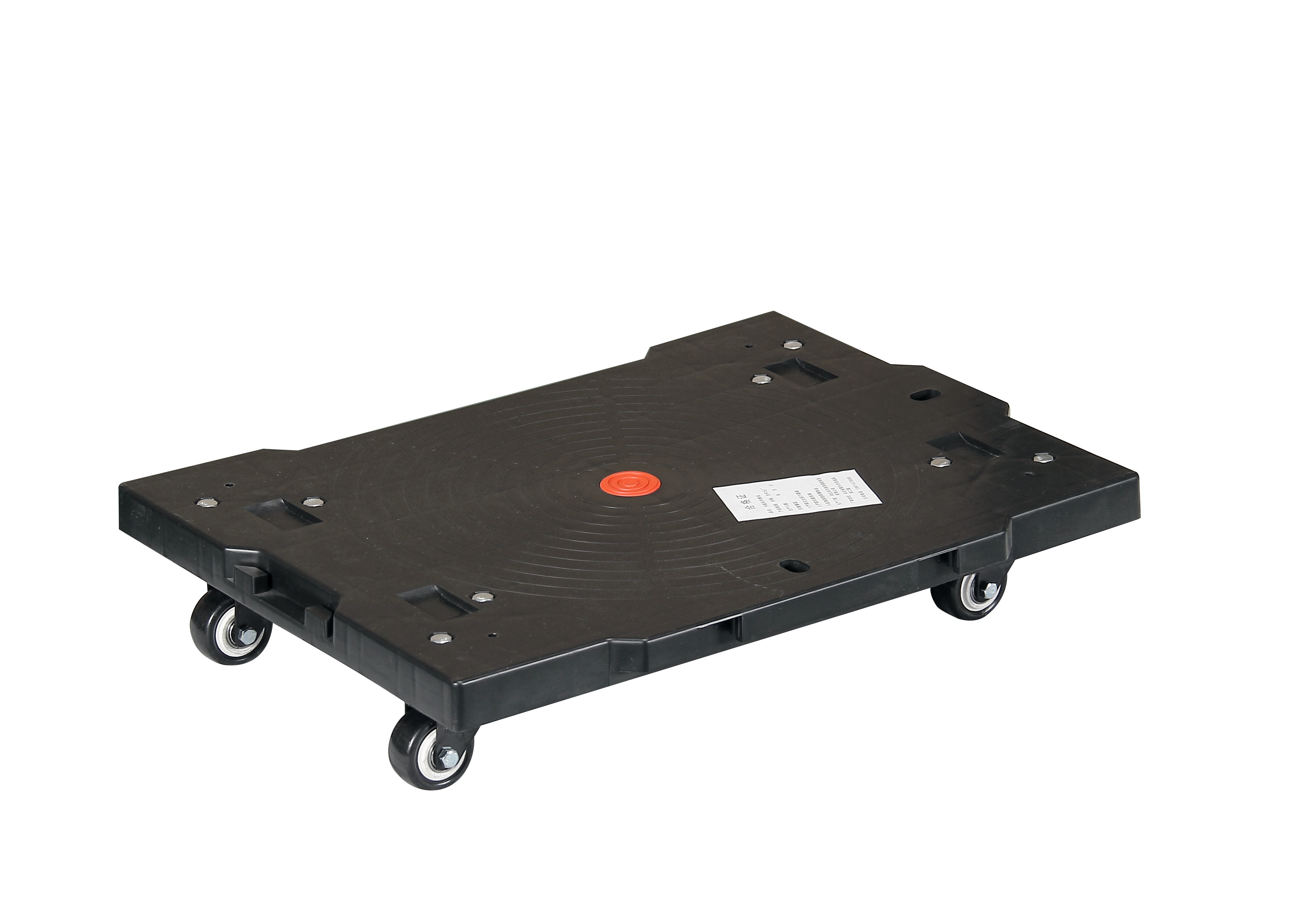
We must define the clear advantages of a flat-deck design. It handles bulky, oddly shaped, or heavy flat-stacked inventory far better than multi-tier picking carts. Multi-tier carts restrict vertical clearance heavily. Flat decks offer completely unrestricted loading space. You can stack wide boxes or awkwardly shaped machinery without fighting overhead barriers.
Furthermore, they feature a highly beneficial low center of gravity. This crucial design element significantly reduces tipping risks during heavy material transport. Workers can move massive loads safely around sharp corners. Tipping accidents cause severe injuries and destroy valuable products. A low deck mitigates this risk naturally.
However, you must know exactly when to pivot to other tools. Transparently, flat decks are not always the right choice. Consider small-parts order picking. If your warehouse process requires strict bin organization, sorting, and scanning of tiny items, a utility picking cart proves vastly superior. You need shelves and dividers to keep small components organized. Flat decks excel at bulk transport, not fine sorting. Always evaluate your primary daily task before committing to a specific design.
You cannot buy material handling equipment based purely on aesthetics or upfront price. You need a rigorous technical evaluation. Let us break down the core specifications that determine long-term success.
Load ratings often mislead inexperienced buyers. You must understand the critical difference between static and dynamic load capabilities. A cart rated for 1,000 lbs static sits perfectly still. It holds that weight safely while parked in a corner.
However, that exact same cart may fail catastrophically at 700 lbs dynamically. What happens when a worker pushes it forcefully over a steel dock plate? What if the warehouse floor features heavy pitting and deep cracks? The sudden impact multiplies the physical force on the casters and the frame. Shock loads destroy bearings quickly.
We strongly advise buyers to spec their equipment carefully. Always add a minimum 20% capacity buffer above your heaviest routine load. This vital safety margin prevents sudden structural failures. It protects your workers from collapse incidents and saves your inventory from dropping.
Your deck material dictates the unit's tare weight, overall durability, and ideal application environment. You must select the material based on your facility's daily abuse levels.
Steel offers maximum durability. It provides incredible impact resistance against forklift forks and heavy dropped items. You will find it ideal for raw industrial warehousing. However, note the significant downsides. Steel is very heavy, increasing worker strain. It also rusts easily if the manufacturer does not powder-coat it properly or if the coating scratches.
Aluminum provides a high strength-to-weight ratio. It resists corrosion naturally without needing protective paint. We recommend it highly for environments requiring strict sanitation, like food processing plants or pharmaceutical facilities. It also helps immensely when personnel must frequently lift the units into delivery trucks.
High-Density Plastic or Structural Foam is highly versatile. It is rust-proof, lightweight, and incredibly resilient. It will not dent, chip, or peel when struck. This remains the preferred choice for retail environments. It maintains a clean aesthetic for years and ensures customer safety by avoiding sharp, rusted edges.
Material Type | Key Advantage | Primary Drawback | Best Application |
|---|---|---|---|
Heavy-Duty Steel | Maximum impact resistance | Heavy tare weight, rust potential | Industrial warehousing |
Extruded Aluminum | High strength-to-weight ratio | Higher initial procurement cost | Food/Pharma, frequent lifting |
Structural Foam | Rust-proof, won't dent or chip | Lower absolute load limit | Retail, customer-facing areas |
Casters account for up to 80% of equipment performance. They are also the most common point of failure. You cannot ignore caster specifications during procurement.
Polyurethane on steel wheels work best for heavy warehouse loads. They roll smoothly on concrete floors. They also resist debris, metal shavings, and small rocks effectively.
Thermoplastic Rubber (TPR) offers a totally different profile. It provides a highly cushioned ride and rolls extremely quietly. Most importantly, it is strictly non-marking. TPR is absolutely mandatory for retail store floors to prevent black streaks.
Pneumatic tires offer excellent shock absorption. They are the only viable option if your workers must transition outdoors across gravel or broken asphalt.
Configuration matters just as much as material. The standard 2-rigid/2-swivel setup allows excellent straight-line tracking. It works perfectly in long, uninterrupted warehouse aisles. Conversely, a 4-swivel setup offers superior 360-degree maneuverability. You need 4-swivel casters to navigate tight-aisle retail storage rooms efficiently.
Manual material handling takes a massive physical toll on your workforce. You must mitigate these physical risks proactively through smart equipment choices.
Poorly designed equipment forces workers to strain unnecessarily. Pushing heavy loads with bad, undersized casters causes severe bodily fatigue. Over time, this repeated strain leads to costly musculoskeletal injuries and lower back trauma. Connect your equipment choice directly to worker well-being. A smooth-rolling cart drastically reduces physical exertion. This lowers injury rates, improves overall morale, and keeps your workforce productive.
Handles dictate how workers physically interact with the load. Evaluate fixed, folding, and removable handles carefully before buying. Fixed handles provide maximum structural rigidity. They handle heavy push forces exceptionally well without bending.
Folding handles save valuable floor space. They are often necessary for space-constrained retail backrooms. However, note that folding mechanisms introduce a mechanical point of failure. The hinges wear out and become loose over time. Choose robust, heavy-duty hinges if you must use folding models.
Sometimes manual push power is simply not enough. You must monitor push and pull forces closely. Do your loads consistently exceed OSHA’s recommended push/pull force guidelines? If so, consider motorized platform carts. These battery-powered units offer a necessary, compliant upgrade path. They eliminate manual physical strain entirely. They protect your workforce from serious physical harm during exceptionally heavy transport tasks.
Equipment fails prematurely when it does not match its environment. You must profile your facility accurately before issuing a purchase order.
Industrial spaces demand absolute physical toughness. You must focus intensely on high durability. Equipment will endure high-impact dock usage daily. It must survive accidental bumps from forklift traffic and rough handling by hurried staff.
If you use automated towline systems, ensure physical compatibility. Your carts must integrate safely into tugger trains using specific hitches.
The core requirement here is heavy-duty construction. You need exceptionally high dynamic load limits. You also need debris-resistant wheels that will not shred on rough concrete. A well-designed Logistics Warehousing Dolly built for this harsh environment will feature reinforced steel bracing and thick polyurethane treads.
Retail environments operate under entirely different operational constraints. You must focus primarily on customer-facing realities.
Aisles are narrow and often crowded. Navigation requires tight, precise turning radiuses. Noise reduction is highly critical. Loud clanking carts disrupt the pleasant shopping experience and annoy customers. Floor protection is absolutely paramount. You must prevent ugly scarring on expensive VCT tile or polished concrete floors.
The core requirement for retail is a compact overall footprint. You must specify TPR non-marking casters. Aesthetic preservation is key, favoring resilient plastics or clean aluminum. Finally, you need folding mechanisms for efficient back-room storage where space is scarce.
Do not rush the final purchase order. Use this systematic checklist to validate your equipment choice comprehensively.
Evaluate the floor surface: Look closely at your facility. Are there steep dock plates? Do you have uneven door thresholds? Are there transitions between smooth concrete and thick carpet? Match your wheel durometer precisely to the softest or most uneven surface your workers cross.
Audit the aisle width: Grab a measuring tape. Calculate the required turning radius for your largest anticipated load. Ensure the cart can rotate fully in your narrowest aisle without striking shelves.
Evaluate long-term maintenance and parts availability: Factor in the availability of replacement casters. A cheap dolly with proprietary, irreplaceable wheels fails quickly and becomes useless. A commercial-grade unit uses standard caster mounting plates. Standard mounts ensure you can swap damaged wheels easily without discarding the entire unit.
Test before scaling: Never buy a massive fleet blindly. We strongly advise requesting a demo unit first. You can also order a single pilot unit. Put it through rigorous daily use before outfitting an entire facility. Gather direct feedback from your warehouse floor staff.
A well-chosen platform dolly serves as a vital operational asset. It represents a strategic investment in daily throughput and physical risk management, rather than just a simple line-item expense. The exact right configuration prevents expensive floor damage, protects worker health, and accelerates daily transport tasks. When you align your deck material, caster type, and load capacity with your specific environment, operations run seamlessly.
We encourage you to take immediate action today. Evaluate your current fleet's maintenance logs to identify recurring caster or frame failures. Assess your heaviest, most physically demanding use-cases on the floor. Finally, consult with a material handling specialist or review a trusted equipment catalog. Find the precise configuration tailored to your operational realities and safeguard your long-term productivity.
A: Terminology often overlaps, but functional specifics matter. A dolly is traditionally a flat platform with no handles. It requires workers to push directly on the load itself. A platform truck or cart includes at least one handle for ergonomic steering. Procurement teams often use the terms interchangeably, so always double-check the exact product specifications before ordering.
A: Replacement timelines depend heavily on usage hours and floor conditions. In heavy, multi-shift warehousing, casters may need replacement every 12 to 18 months. Smooth retail environments can see quality casters last three to five years. Remember that regularly greasing Zerk fittings on the wheel bearings will significantly extend the caster's functional lifespan.
A: Yes, B2B equipment suppliers frequently offer highly customized solutions. You can order custom deck sizes to match unique inventory footprints. You can specify exact caster combinations for specific floor types. Suppliers also provide specialized handle configurations, such as tall pipe stakes or side rails, to secure difficult or oddly shaped materials safely.


