


Views: 0 Author: Site Editor Publish Time: 2026-07-04 Origin: Site


Material handling operations might seem straightforward. You place items on a wheeled base and move them across the facility floor. However, equipment failure during manual transport quickly reveals a different reality. These failures lead to operational bottlenecks. They damage valuable inventory. Worst of all, they cause costly workplace injuries.
The core problem often begins in the purchasing department. Procurement teams usually default to the highest "max weight" rating they find on a specification sheet. They completely overlook crucial real-world factors. Dynamic movement forces matter. Uneven floor conditions matter. Human ergonomic limits matter heavily. Falling into this simplistic spec-sheet trap compromises both safety and daily efficiency.
We designed this guide to solve this exact issue. You need a standardized evaluation framework to make smart equipment choices. We will break down how to select the exact material handling tools required for your daily operations. You will learn to decode misleading capacity ratings and map environmental variables. Following these steps ensures your logistics remain safe, compliant, and highly efficient.
Static vs. Dynamic Load: A platform dolly’s advertised weight capacity is typically its static (stationary) limit; safe rolling capacity is significantly lower.
Context Dictates Capacity: Uneven surfaces, debris, and inclines degrade effective load limits by up to 30%.
Form Factor Matters: Choosing between a flush platform dolly and a platform trolley depends heavily on load stability and operator ergonomics.
Compliance First: Procurement must align equipment specifications with local occupational health and safety manual handling guidelines.
Evaluating a Platform Dolly requires looking past the bold numbers printed on the marketing brochure. Manufacturers rigorously test equipment under ideal conditions. Unfortunately, warehouse floors rarely mirror a pristine testing laboratory. You must understand the engineering nuances behind weight limits to prevent sudden structural failure.
You must clearly distinguish between static load and dynamic load. Static capacity refers to the absolute maximum weight the equipment can support while remaining completely stationary. Engineers measure this by placing a perfectly balanced weight onto the deck and observing structural integrity. Dynamic capacity refers to the weight the unit can safely support while in motion. When operators push loads across a floor, they introduce vibrations, lateral forces, and uneven weight distribution. These active forces strain casters and deck structures. Consequently, dynamic capacity always sits significantly lower than static capacity. Assuming a static rating applies to a moving load guarantees premature equipment breakdown.
Logistics managers must implement practical safeguards to extend equipment life. We strongly recommend adopting the 80% safety margin rule for daily operations. You should cap everyday working loads at 80% of the manufacturer’s stated dynamic capacity. Pushing casters to their absolute maximum limit generates excessive friction. This friction produces heat, degrades wheel bearings, and warps internal components. Operating slightly below maximum capacity provides a crucial buffer. It prevents catastrophic caster failure when operators unexpectedly encounter debris or uneven surfaces.
Many facilities ignore the hidden dangers of shock loading. Shock loading occurs when workers drop heavy items directly onto the deck rather than placing them down gently. Dropping a 100-pound motor from just a few inches multiplies the gravitational force acting on the cart. This sudden impact easily exceeds the dynamic capacity for a split second. Over time, repeated shock loading fractures the deck material. It also bends the caster mounting plates. You must train operators to minimize drop distances and understand how impact force compromises structural integrity.
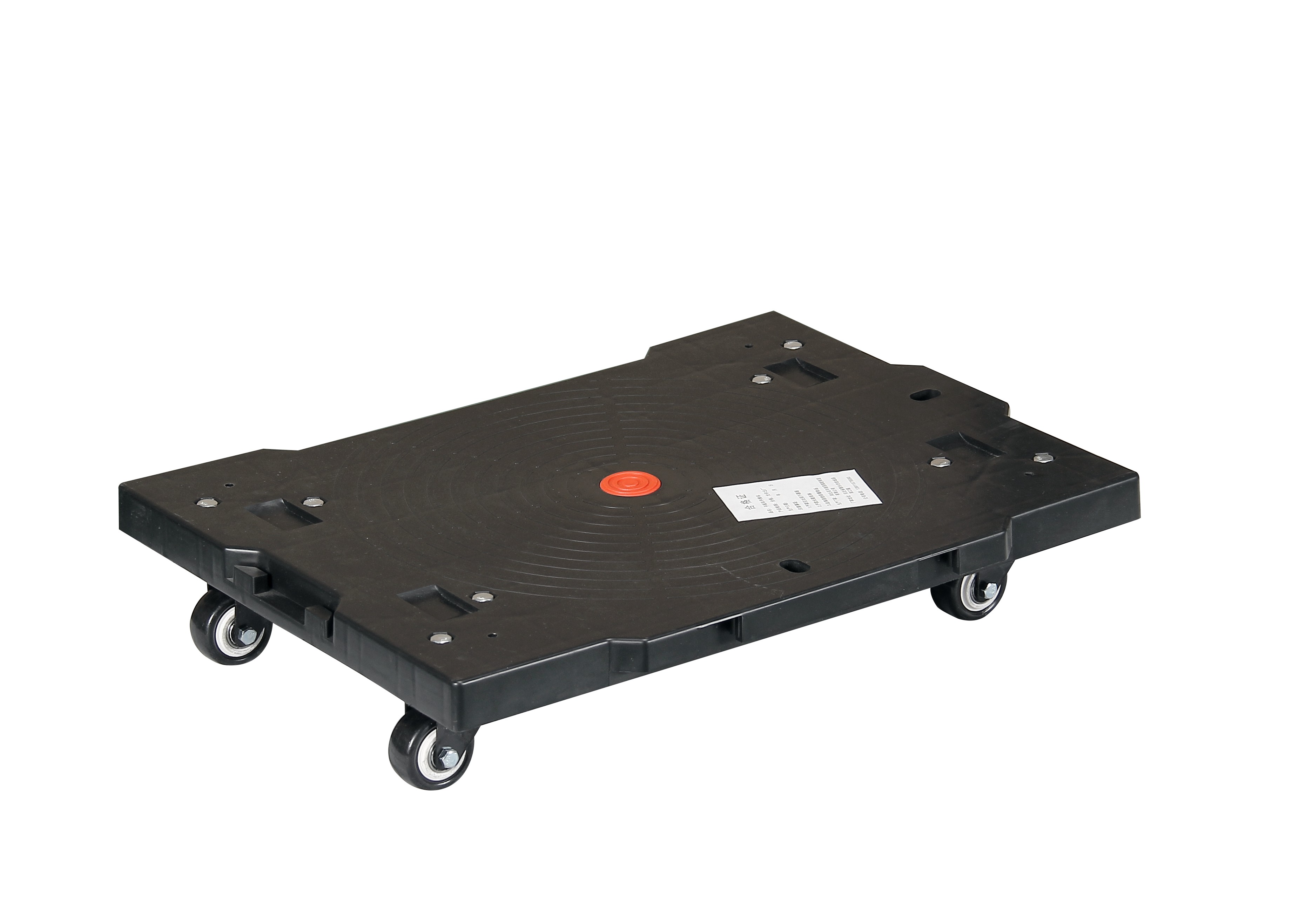
The physical environment dictates true handling capacity. A perfectly specified cart will still fail if it operates on the wrong surface. You must map your operational terrain to understand how environmental factors degrade optimal performance parameters.
Concrete floors look flat, but they hide numerous imperfections. Expansion joints, doorway thresholds, and metal grating aggressively reduce effective load capacity. When small casters strike an expansion joint, forward momentum abruptly halts. The operator must then exert massive physical effort to push the load out of the rut. Rough surfaces increase rolling resistance substantially. In many industrial environments, surface degradation reduces effective handling capacity by up to 30%. You must factor these obstacles into your procurement math.
The wheels represent the most critical component of any handling device. Choosing the wrong caster material negates high deck capacity. You must balance floor protection against rolling resistance based on your specific route.
Caster Material | Load Capacity | Floor Protection | Rolling Resistance | Best Application |
|---|---|---|---|---|
Hard Wheels (Nylon/Steel) | Very High | Poor (May scratch floors) | Very Low | Heavy loads on smooth, pristine concrete. |
Soft Wheels (Rubber/Polyurethane) | Medium to High | Excellent | Higher | Irregular surfaces, debris-prone areas, delicate floors. |
Hard wheels carry more weight effortlessly. However, they transfer every shock directly to the cargo and can permanently scar painted floors. Soft wheels absorb shocks beautifully. They glide over minor debris. The trade-off is higher rolling resistance. A fully loaded polyurethane wheel flattens slightly at the contact patch, requiring operators to push harder to maintain momentum.
Navigating ramps drastically alters manual handling mathematics. Pushing a loaded cart up a 5-degree incline forces the operator to fight gravity. The safe manual handling capacity plummets the moment a ramp enters the route. A single operator might comfortably push 800 pounds on flat ground. That same operator may struggle safely pushing 400 pounds up a loading dock ramp. You must calculate incline angles and reduce allowable loads accordingly to prevent strain injuries and runaway carts.
Understanding form factor ensures you match the tool to the specific cargo. Using the wrong structural design creates unnecessary ergonomic hazards and load stability risks.
The traditional flush dolly design excels in specific scenarios. It works best for bulky, symmetrical loads where vertical clearance remains strictly limited. Because it lacks a handle, the operator must push directly on the load itself. This requires extreme caution. You must evaluate load stability before movement begins. If you transport tall, top-heavy items on a flush deck, pushing directly on the cargo risks tipping the entire stack. Flush designs shine when moving heavy crates, large appliances, or stacked totes securely strapped together.
For more complex loads, operations require a Platform Trolley. This design excels at moving loose, stacked, or asymmetrical items. The integrated handle transforms the handling dynamic entirely. It allows for precise, ergonomic steering in tight spaces. More importantly, the handle transfers the operator's push-force directly to the rigid deck structure. It directs force away from delicate or unstable cargo. Operators maintain a neutral spine posture while navigating complex warehouse aisles.
Logistics managers must recognize the operational transition point. When do you upgrade from a simple flush deck to a handled cart? We base this decision on travel distance and daily volume. If operators move items less than 20 feet a few times a day, a flush deck suffices. If they transport loads across hundreds of feet of warehouse space continuously, you must upgrade. The handled design reduces fatigue, increases travel speed, and provides superior maneuverability over long distances.
Material science has fundamentally changed warehouse logistics. Traditional building materials are rapidly giving way to advanced polymers. Facilities increasingly recognize the operational superiority of injection-molded plastics over older alternatives.
Modern logistics facilities are actively transitioning away from heavy metal equipment. We see a massive shift toward advanced polymer decks. Engineers now utilize specialized injection-molding techniques to create structural ribbing beneath the deck. This honeycomb-style reinforcement delivers immense strength while eliminating dead weight. It provides the heavy-duty performance of steel without the massive physical burden.
Procurement teams must evaluate the weight-to-capacity ratio. A Heavy Duty Plastic Dolly often achieves load capacities exceeding 1,000 pounds. Despite this massive strength, the unit itself remains incredibly lightweight. Operators can easily pick up the empty deck by hand and store it vertically. They can carry it up stairs or place it into delivery vehicles without risking back strain. Steel equivalents capable of bearing 1,000 pounds often weigh too much for a single worker to lift safely.
Many industries operate under strict sanitary protocols. Food processing plants, pharmaceutical labs, and damp warehouses destroy traditional equipment quickly. Advanced polymers offer total immunity to rust and oxidation. They resist harsh industrial chemicals, greases, and cleaning solvents. Operators can aggressively pressure-wash plastic decks at the end of a shift without causing corrosion. This environmental durability prevents cross-contamination and ensures compliance with strict hygiene standards.
You must understand the objective limitations of older materials before making a purchase. Consider these stark operational differences:
Wood: Wooden decks splinter easily upon impact. They absorb moisture, leading to internal rot and unpredictable load failure. They generally offer lower absolute limits and pose splinter hazards to workers.
Steel: Steel delivers high capacity but introduces severe drawbacks. It rusts in damp environments. Impact causes permanent denting. The heavy tare weight tires workers out, even when they push an empty cart.
Protecting the musculoskeletal health of your workforce requires strict adherence to biomechanical principles. Equipment choices directly dictate whether your facility experiences chronic worker injuries or safe daily operations.
Procurement must align equipment specifications tightly with local occupational health standards. Agencies like OSHA provide broad manual handling guidelines. You must translate these broad rules into strict equipment requirements. For example, if guidelines limit single-worker push force to a specific poundage, your cart and caster combination must fall below that threshold when fully loaded. Ignoring these regulatory boundaries exposes your operation to severe compliance penalties and high injury rates.
Biomechanics dictate movement safety. You must mandate cart designs promoting pushing rather than pulling. When an operator pushes a heavy load, they engage their powerful leg muscles and maintain a stable, neutral spine. They utilize their entire body weight for forward momentum. Conversely, pulling a heavy cart forces operators to twist their shoulders. It places dangerous shear forces directly on the vulnerable lower back. Furthermore, pulling means the cart rolls uncomfortably close to the operator's heels, creating a severe tripping hazard. Always specify equipment encouraging safe pushing mechanics.
Evaluating ergonomic strain requires understanding two distinct force measurements. Initial force represents the energy required to break static friction and start the wheels moving. Sustained force represents the energy needed to keep the cart rolling at a steady walking pace. Heavy loads on poor casters require massive initial force, which frequently causes immediate back injuries. You must demand high-quality precision bearings in your casters. Precision bearings drastically lower the initial push force, protecting operators during the most dangerous phase of manual transport.
Standardizing your purchasing process eliminates guesswork. Use this step-by-step framework to guarantee you acquire the exact equipment your facility truly needs.
Audit the Heaviest Routine Load: Do not guess weight limits. Identify the absolute heaviest item your team moves regularly. Document its exact maximum weight, physical dimensions, and center of gravity. Size matters just as much as weight when ensuring load stability.
Map the Route: Walk the actual path the equipment will travel. Document floor surface types, common debris risks, ramp inclines, and elevator thresholds. Use this specific route data to specify the correct caster material and wheel diameter.
Factor in the Operator: Apply strict ergonomic limits to your load calculations. Determine the required initial push force. If the necessary force exceeds safe human limits on your documented route, manual equipment is insufficient. You must specify a motorized or power-assisted cart to guarantee safety and positive ROI.
Vendor Verification: Scrutinize your supplier rigorously. Look beyond the initial price tag. Demand transparent testing data proving dynamic capacity. Ensure they offer a robust warranty covering structural deck integrity. Verify they maintain a readily available inventory of replacement casters to minimize future downtime.
Selecting the ideal material handling equipment goes far beyond reading a single maximum weight number on a catalog page. It requires understanding the critical intersection of load realities, harsh floor conditions, and human ergonomic limits. By differentiating between static and dynamic capacities, you prevent dangerous structural failures. By choosing the right deck materials and caster combinations, you streamline daily workflows and protect your facility surfaces.
Your next steps involve action on the warehouse floor. We recommend you conduct a thorough floor audit mapping your specific transit routes this week. Document the inclines, thresholds, and routine heavy loads your operators face. Then, consult directly with a material handling specialist to match specialized casters and advanced polymer decks to your exact operational reality. Prioritizing correct specifications today guarantees a safer, highly efficient workforce tomorrow.
A: Static capacity measures the maximum weight the equipment can support while completely stationary. Dynamic capacity measures the safe weight limit while the unit is moving. Dynamic limits are always significantly lower because movement introduces vibrations, lateral forces, and shock impacts that stress casters and deck structures.
A: No. Moving slowly does not negate excess mass. Exceeding dynamic capacity overloads wheel bearings, warps mounting plates, and strains the deck material. Even at slow speeds, hitting a minor floor crack with an overloaded cart can trigger catastrophic structural failure and severe workplace injuries.
A: Rough concrete requires casters with excellent shock absorption. You should select polyurethane or specialized thick rubber wheels. These softer materials glide over minor debris and absorb impacts from expansion joints, protecting both the cargo and the structural integrity of the plastic deck.
A: You should switch to motorized equipment when operators regularly navigate steep inclines, or when route distances become excessive. Additionally, if the initial push-force required to move your typical load exceeds occupational health safety limits, motorized carts become mandatory to prevent musculoskeletal injuries.


