


Views: 0 Author: Site Editor Publish Time: 2026-08-06 Origin: Site


Industrial mobility grinds to a halt when equipment faces continuous wet conditions. Facilities lose millions annually to premature hardware failure in washdown environments. Unplanned downtime disrupts strict production schedules. Frequent part replacements drain operational budgets quickly. Safety hazards multiply when rusted components finally lock up or snap on wet floors.
You might assume the term waterproof implies a universal standard. However, it actually represents a very broad spectrum. Standard mobility components break down fast under high-pressure sprays. Standing puddles and harsh chemical cleaners accelerate this rapid degradation. A rig surviving ambient moisture will likely fail in a meat processing plant.
We will explore a technical evaluation framework for specifying these specialized components. You will learn how to match materials, bearings, and treads to your facility's exact exposure levels. This guide empowers engineers and procurement teams to maximize reliability. You can secure operational compliance while driving long-term value.
Standard zinc-plated casters are insufficient for continuous wet exposure; structural degradation begins within weeks.
The bearing is the most common point of failure; specifying a true sealed caster bearing is non-negotiable for washdown environments.
Rigid material selection (304 vs. 316 stainless steel vs. high-density plastics) must align with the specific cleaning chemicals and temperature ranges of the facility.
Wheel tread selection (e.g., PU caster wheel vs. solid Nylon) dictates traction on slick, wet floors and prevents hydroplaning.
You cannot specify a robust solution without defining your exact environmental parameters. Moisture exposure varies dramatically across different industrial sectors. A simple puddle requires a different engineering approach than a continuous chemical spray. Engineers must assess their floor conditions meticulously before ordering new components.
First, define your specific exposure level. You must differentiate between three distinct moisture categories. Ambient moisture occurs in standard humid warehouses. Occasional splashing happens during light cleaning or seasonal weather shifts. High-pressure washdowns represent the most extreme category. These intensive cleaning cycles often require IP69K compliance to survive thermal shocks and heavy water jets.
We must also distinguish between pure water exposure and chemical exposure. Water rarely exists in a pure state on factory floors. It often carries highly corrosive elements. Saltwater degrades metals quickly in marine environments. Acidic food byproducts attack wheels in poultry processing plants. Alkaline cleaning agents strip protective coatings off standard steel brackets.
To evaluate your baseline properly, follow this numbered assessment process:
Audit cleaning frequency: Determine if you wash equipment daily, weekly, or monthly.
Measure water pressure: Note whether cleaning uses low-pressure hoses or high-intensity spray nozzles.
Identify chemical pH: Catalog every sanitizer, degreaser, and foam cleaner used in your facility.
Track temperature shifts: Record the maximum temperature reached during steam cleaning procedures.
Do not fixate solely on the initial purchase price. Standard components look appealing on a preliminary budget sheet. However, frequent replacements erode your maintenance budget quickly. Frame the return on investment carefully. Buying a purpose-built corrosion-resistant caster reduces unexpected downtime. It eliminates the labor costs associated with swapping out broken parts every few months. Long-term durability always outpaces short-term savings in wet environments.
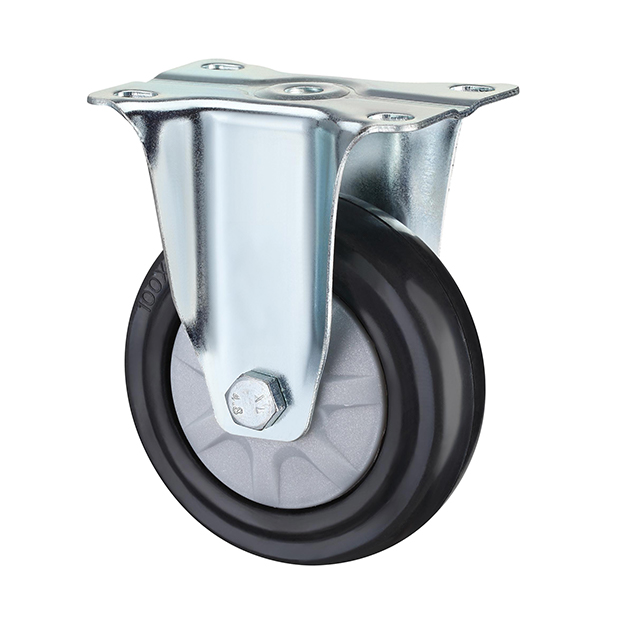
The rig serves as the structural backbone of your mobility system. If the fork rusts, the entire unit fails structurally. Material selection remains your most critical line of defense against wet environments. You must match the metal or synthetic blend to your chemical exposure.
Stainless steel dominates the high-moisture industrial market. We generally rely on two distinct grades for these applications. Industry professionals specify 304 stainless steel as the universal standard. It performs exceptionally well in general wet conditions. Food processing plants rely heavily on 304 stainless for everyday hygiene requirements. It resists water and mild sanitizers effortlessly.
However, 304 stainless has limits. You must upgrade to 316 stainless steel for highly corrosive spaces. Facilities handling saltwater, heavy chlorides, or strong acids require this premium grade. The added molybdenum in 316 stainless prevents pitting corrosion. It survives harsh chemical washes far better than its 304 counterpart.
High-impact synthetics offer another compelling alternative. Manufacturers mold these non-metallic rigs from nylon or glass-filled polymers. They eliminate the risk of rust entirely. We evaluate these plastic rigs for lightweight to medium load requirements. They excel in MRI rooms or light medical facilities. However, they carry strict weight capacity limitations. They cannot support the massive loads typical of heavy steel brackets.
We must address the cautionary tale of galvanized or zinc-plated materials. Many procurement teams mistakenly buy zinc-plated units for wet areas. Clarify this misunderstanding immediately. Zinc plating is merely rust-resistant, not waterproof. The thin protective layer wears off quickly during normal operations. Once scratched, the underlying steel oxidizes rapidly. You should strictly avoid zinc-plated forks in true wet industrial zones.
Rig Material Suitability Matrix
Material Type |
Corrosion Resistance |
Best Environment |
Load Capacity |
|---|---|---|---|
304 Stainless Steel |
High |
Food processing, frequent washdowns |
Heavy-duty |
316 Stainless Steel |
Very High |
Marine, chemical plants, chlorides |
Heavy-duty |
Glass-Filled Nylon |
Absolute (No Rust) |
Medical, light wet areas, washrooms |
Light to Medium |
Zinc-Plated Steel |
Low (Temporary) |
Dry warehouses, indoor storage |
Heavy-duty |
Traction becomes a massive safety concern on wet floors. Hard wheels slip easily on slick surfaces. Soft wheels might grip well but degrade quickly under heavy loads. Choosing the optimal tread material requires balancing grip, chemical resistance, and structural integrity.
Specifying a PU caster wheel solves many traction problems. Polyurethane offers superior grip on slippery epoxy or concrete floors. It grabs the surface securely, preventing dangerous lateral sliding. Polyurethane also provides excellent noise reduction. It absorbs vibrations effectively during transit, keeping warehouse decibel levels low.
However, you must navigate hydrolysis risks carefully. Polyurethane reacts poorly to water if you choose the wrong chemical blend. Continuous moisture exposure breaks down certain molecular bonds. You must specifically request polyether-based polyurethane. Polyether resists water penetration and hydrolysis. Conversely, polyester-based polyurethane breaks down, chunks, and peels when left in standing water. Always verify the chemical base before ordering.
Solid nylon or polyamide wheels offer a completely different set of benefits. Nylon boasts extraordinary chemical resistance. It repels oils, greases, and strong alkaline cleaners. Polyamide features zero water absorption. It never swells or degrades in wet conditions. You must balance these benefits against notable drawbacks. Nylon lacks shock absorption completely. It rolls very loudly. It also poses a potential risk for floor damage on softer surfaces.
Tread profile considerations impact safety significantly. Flat-faced wheels push water forward, creating a hydroplaning effect. They slide uncontrollably across wet puddles. To prevent this, you should specify crowned treads. A rounded profile cuts through standing water efficiently. Some manufacturers also offer grooved designs. These channels displace liquid away from the contact patch. Improved water displacement translates directly to better operator safety.
Polyether PU: Best for wet grip and hydrolysis resistance.
Solid Nylon: Best for harsh chemicals and zero water absorption.
Crowned Profile: Best for displacing puddles and preventing slips.
Grooved Tread: Best for shedding heavy liquids quickly.
The swiveling action and rolling momentum depend entirely on the bearings. Unfortunately, the bearing serves as the weakest link in any wet environment. Even if you buy premium stainless steel rigs, exposed bearings will ruin your investment.
Water ingress destroys standard bearings rapidly. When water penetrates the wheel hub, it mixes with the internal lubrication. This causes severe grease emulsification. The grease turns into a milky, ineffective paste. Without proper lubrication, friction increases dramatically. Internal rusting locks the ball bearings in place. Soon, the wheel stops turning entirely, forcing operators to drag heavy equipment across the floor.
Specifying a true sealed caster bearing remains non-negotiable for washdown zones. You cannot rely on basic dust shields. You need precision sealed ball bearings. Look for components carrying RS or 2RS designations. These rubber seals block moisture effectively. Furthermore, the manufacturer must pack these bearings with water-resistant synthetic grease. Standard lithium grease washes out too easily under pressure.
You must also protect the swivel head assembly. The rig's turning mechanism houses dozens of vulnerable steel balls. Engineers use raceway seals to protect this sensitive area. Labyrinth seals provide excellent defense. They force water through a complex, winding path, dissipating the pressure before it reaches the core. Rubber O-rings offer another layer of tight defense against high-pressure jets.
If you face total submersion, consider Delrin or polyacetal bearings. These advanced plastics offer a rust-proof alternative. They require zero maintenance and zero grease. Delrin bearings spin smoothly even when completely underwater. We evaluate them highly for lighter loads. However, they create slightly more rolling resistance than precision ball bearings. You trade effortless rolling for absolute water immunity.
Industrial mobility does not exist in a vacuum. Your equipment must meet strict external regulations. Food, beverage, and pharmaceutical facilities operate under intense scrutiny. A simple rusted bracket can trigger a massive audit failure. You must understand how your hardware impacts facility compliance.
Meeting strict hygiene standards often demands a dedicated washdown equipment caster. Organizations like the NSF, FDA, and USDA publish rigorous equipment guidelines. Washdown environments require specific design geometries. Standard units contain deep crevices, exposed threads, and hollow rivets. These hidden spaces harbor dangerous bacteria like Listeria or Salmonella. Hygienic designs eliminate these traps. They feature smooth surfaces, welded joints, and sloped forks. Water and organic debris drain off them instantly.
You must also plan for load derating in extreme conditions. High-temperature washdowns stress polymer materials severely. Boiling water and pressurized steam soften certain plastics temporarily. We transparently advise engineers about this phenomenon. Extreme heat may temporarily reduce the dynamic load capacity of polyurethane wheels. If your carts carry maximum weight immediately after a steam cleaning, the wheels might deform. Always calculate a safety margin for temperature-induced derating.
Acknowledge the realities of routine maintenance. Nothing lasts forever, even in perfect conditions. Maintain credibility by scheduling periodic inspections. The best hardware still demands a keen eye. Maintenance teams must verify seal integrity monthly. They should look for torn rubber O-rings or missing raceway shields. They must also inspect the mounting bolts. A pristine stainless rig will fail if attached with cheap, rusting carbon steel bolts. Ensure your fastening hardware matches the grade of your specified mobility components.
Common Mistakes to Avoid:
Assuming zinc-plated hardware withstands daily chemical washes.
Installing polyester-based polyurethane in standing water.
Forgetting to upgrade mounting bolts to 304 or 316 stainless.
Ignoring load capacity drops during high-heat steam cleaning.
Finding the right waterproof industrial casters begins with a logical shortlisting process. You must analyze your exact environment first. Map out your chemical exposure and moisture frequency. Determine your maximum load capacity under standard conditions. Finally, select your rig materials and bearing seals based on that specific data matrix.
Do not guess when specifying industrial hardware. We encourage you to audit your current failure points today. Look closely at your broken carts. Is the wheel tread tearing apart? Is the swivel locking up from rust? Identify the exact mechanism of failure first. Once you understand the root cause, request a customized quote or a sample. Test the new configuration in your actual facility before rolling it out floor-wide.
A: Water-resistant units handle light splashing and ambient humidity. They typically use zinc plating or basic dust shields. Waterproof units endure continuous submersion or high-pressure sprays. They feature 304/316 stainless steel, fully sealed precision bearings, and specific IP69K ratings for ultimate moisture defense.
A: Yes, but with strict limitations. Polyurethane handles moderate heat well. However, temperatures exceeding 180°F (82°C) during intense steam cleaning can soften the material. For extreme heat, you should specify high-temp nylon, epoxy, or phenolic wheels to prevent tread deformation.
A: They use specialized mechanical defenses. RS or 2RS rubber seals fit tightly against the inner ring, physically blocking water ingress. Additionally, manufacturers fill the internal cavity with synthetic, water-repellent grease. This grease resists emulsification, preventing internal rust and maintaining smooth rotation.
A: Generally, yes. 304 stainless steel resists blood, animal fats, and standard sanitizers perfectly. However, if your cleaning protocol relies on highly caustic daily foam cleaners or heavy chloride solutions, you should upgrade to 316 stainless to prevent long-term pitting.


