


Views: 0 Author: Site Editor Publish Time: 2026-07-09 Origin: Site


Selecting mobility components is rarely viewed as a major strategic move in large-scale operations. However, treating this hardware purchase as a minor detail is a dangerous mistake. It actually serves as a critical operational decision. Your choice directly affects workplace safety, daily workflow efficiency, and overall equipment lifespan. Industrial environments are unforgiving spaces. Facility managers regularly encounter tough hazards on the floor. You will find sharp metal shavings, corrosive chemical spills, and heavily uneven concrete floors. Furthermore, dynamic load stresses constantly pound moving equipment under intense daily strain. Achieving reliable industrial mobility requires moving far beyond basic static weight capacities. You must rigorously evaluate internal bearing engineering. You must also ensure strict material compatibility and calculate realistic safety margins. Properly engineered equipment ensures your manufacturing plants keep moving safely. We will explore exactly how careful engineering transforms a simple wheel into a vital asset.
Reliability relies on the rig: Kingpinless swivel designs and forged steel rigs prevent catastrophic failures under high-impact loads.
Calculate for reality, not ideal conditions: Safe load capacities must account for uneven floors using the "Total Weight ÷ 3" industry standard.
Material dictates performance: Wheel materials must strictly align with environmental hazards (e.g., polyurethane for floor protection, nylon for chemical resistance).
Stability requires adaptability: Adjustable caster wheels and leveling mechanisms are essential for heavy manufacturing equipment requiring fixed stability after movement.
Many managers underestimate the ripple effects of poor mobility choices. Choosing incorrect equipment introduces invisible operational hurdles across the facility. We must examine how bad selections harm production and personnel.
Operational Downtime: Premature wheel wear halts assembly lines quickly. A sudden rig failure paralyzes warehouse logistics entirely. Operators cannot move heavy carts when cheap bearings seize. Workflows bottleneck instantly across the entire production floor. You lose precious hours replacing broken mounts and transferring loads manually. These delays compound over weeks and months. Forklifts must detour around stranded carts. This causes further traffic congestion. When mobility fails, your entire logistical chain suffers immense disruptions.
Workplace Safety and Ergonomics: High push and pull resistance severely impacts operators. Workers face immense strain moving heavy loads manually. Operator fatigue sets in quickly during a long shift. This drastically raises musculoskeletal injury risks among your staff. Ergonomic standards require low rolling resistance to protect workers. Ignoring these standards puts your workforce in danger. Properly chosen Casters prevent these serious injuries. They ensure smooth movement across tough factory floors. A well-engineered wheel reduces the initial push force required by up to forty percent.
The term "heavy duty" is frequently misunderstood in catalog specifications. It is not just about a thick wheel tread. True reliability stems from precise mechanical engineering inside the housing. Let us explore the core anatomical features. These features define genuine Heavy Duty Casters.
The swivel section endures the most physical abuse. Traditional kingpin designs feature a central bolt holding the bearing raceways together. This bolt is highly prone to shearing. High-impact loads easily snap traditional kingpins. Once the bolt breaks, catastrophic failure occurs immediately.
Kingpinless designs offer a vastly superior alternative. This engineering removes the central bolt entirely. Instead, a forged steel ring houses the ball bearings. The design distributes stress evenly across precision-machined raceways. We highly recommend kingpinless swivels for towing applications. They easily survive harsh impacts and continuous lateral stress.
Bearings dictate how much effort you need to move a load. They also determine maximum load limits. You must select the correct bearing for your specific application.
Bearing Type | Primary Advantage | Ideal Application |
|---|---|---|
Precision Ball Bearings | Extremely low rolling resistance | Ergonomic manual pushing, moderate loads |
Tapered Roller Bearings | Absorbs severe side-thrust impacts | Extreme heavy manufacturing, towing applications |
Delrin/Nylon Bearings | Corrosion and moisture resistant | Wet processing, harsh chemical washdown areas |
The rig acts as the structural foundation. Thin stamped metal deforms quickly under dynamic stress. You must demand cold-forged steel rigs for serious industrial tasks. Cold forging aligns the grain structure of the metal. This process drastically increases tensile strength. Thicker yokes prevent the legs from spreading apart under massive loads. A spreading yoke causes the wheel to bind and stop rotating permanently.
Your wheel material must strictly align with your facility floor. The wrong material destroys expensive flooring. It can also cause carts to slide dangerously out of control. We must match materials to specific environmental hazards.
Polyurethane Wheels: These remain the best overall choice for warehousing. Polyurethane balances high load capacity well. It also offers excellent debris rejection. The softer tread protects concrete floors from scratching. They roll quietly and absorb minor vibrations. You can specify different durometer ratings. A softer durometer grips better. A harder durometer increases total weight limits.
Forged Steel and Cast Iron: Engineers specify these for extreme heavy manufacturing environments. They offer the absolute highest load capacity available. However, they provide zero shock absorption. They will heavily damage unsealed or epoxy-coated floors. Use them only on raw, reinforced concrete or steel tracks. They easily crush debris like nails or metal shavings without sustaining damage.
Nylon and Glass-Filled Synthetics: These represent the industry standard for wet processing facilities. They resist harsh chemicals, solvents, and industrial cleaning agents. Furthermore, synthetics resist flat-spotting under static loads. This makes them perfect for equipment sitting idle for long periods. They perform exceptionally well in extreme cold environments like commercial freezers.
Always conduct a thorough environmental audit before buying. Prompt your maintenance team to audit the floors. Look for metal shavings, screws, or nails. Check for pooling oil or extreme temperature fluctuations. You must select materials engineered to survive these exact hazards.
Paper specifications rarely match factory floor realities. A common mistake involves dividing the total load weight evenly by four. Industrial floors are rarely perfectly flat. You must calculate capacities using realistic mathematical models.
Engineers utilize a standard safety assumption. On uneven industrial floors, only three wheels bear the total load simultaneously. One wheel often hovers slightly over a dip in the concrete. To find your required capacity per wheel, calculate the total equipment weight. Add the maximum intended payload. Divide this combined total by three. For example, a cart weighing 500 pounds carrying a 2,500-pound payload totals 3,000 pounds. Dividing by three means each wheel must support 1,000 pounds safely.
You must differentiate between stationary weight and moving stress. A static load applies steady, downward pressure. A dynamic load multiplies physical stress rapidly. Movement introduces vibration, sudden stops, and obstacle impacts. Hitting an expansion joint at three miles per hour generates massive shockwaves. Your selected hardware must handle these dynamic spikes without deforming.
We recommend applying a 25% to 30% safety margin buffer. Add this buffer on top of your calculated maximum loads. This protects against operator overloading. It also absorbs sudden drop impacts from loading equipment. A generous safety factor drastically extends the lifespan of your mobility equipment. It acts as an insurance policy against unpredictable floor conditions.
Manufacturing plants often face a unique mobility challenge. Heavy machinery requires occasional repositioning across the factory floor. However, it must remain completely rigid and level during active operation.
Standard wheels cannot provide fixed stability. Even under strong brakes, rubber treads compress slightly under vibration. This minor movement ruins precision machining tasks. Operators need equipment to be fully mobile for repositioning. Yet, the machine must be completely immovable once placed. CNC machines and robotic arms demand absolute rigidity to function properly.
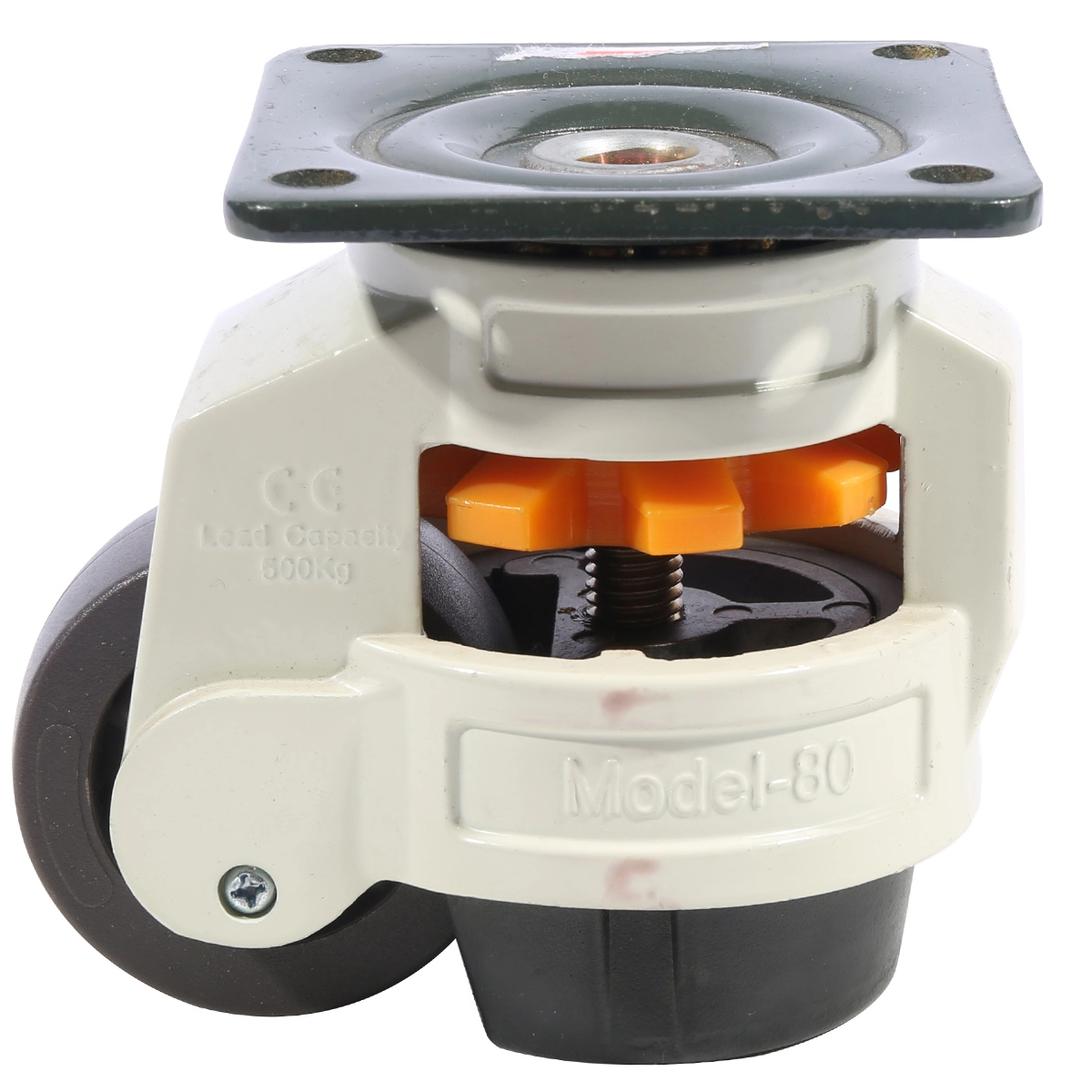
We solve this using highly specialized solutions. Adjustable Caster Wheels combine mobility and stability perfectly. They integrate heavy duty wheels alongside ratcheting leveling pads. Operators roll the machine into the exact desired position. They then lower the rigid leveling pad using a built-in ratcheting mechanism. This lifts the wheel slightly off the floor. It transfers the massive weight directly to a solid, stationary foot.
Adjustable mounts do more than just level machinery. The solid pads absorb operational vibration from heavy equipment. This protects delicate internal calibration. It also prevents the machine from walking across the floor during intense cycles. It preserves floor integrity by distributing weight over a larger, flat surface area.
Not all mobility vendors are created equal. You need a reliable partner capable of supporting your operational goals. Use this actionable checklist to evaluate potential suppliers before signing purchase orders.
Compliance and Testing: Always look for vendors testing their products rigorously. They should adhere to ISO standards. They should also meet ANSI/ICWM (Institute of Caster and Wheel Manufacturers) testing protocols. Certified testing guarantees the hardware meets its published performance claims. Reputable suppliers conduct severe obstacle drop tests to prove rig durability.
Maintenance Requirements: Industrial environments are dirty and demanding. Prioritize designs featuring easily accessible grease zerk fittings. Maintenance crews need quick access to lubricate raceways and bearings. This prevents friction heat buildup. For washdown environments, demand fully sealed bearings. Seals prevent water and harsh cleaning chemicals from destroying internal components.
Customization Capabilities: Assess if the vendor can modify standard designs. They should be able to alter mounting plate dimensions easily. They should offer different brake configurations, such as total lock versus simple wheel lock. Vendors must tailor tread profiles based on your specific facility specificities. A flexible vendor is a valuable long-term partner capable of solving unique material handling challenges.
Specifying mobility hardware is fundamentally an exercise in risk mitigation. It optimizes daily workflow and protects your human workforce. Choosing correctly prevents catastrophic failures and reduces costly downtime. It transforms a basic cart into a highly reliable material handling tool. We encourage all buyers to conduct a comprehensive floor and load audit immediately. Walk your facility and identify common floor hazards. Document the maximum payloads your carts will carry. Use the "Divide by 3" rule to establish baseline load requirements. Evaluate the specific chemical exposures in your processing areas. Do not guess when dealing with heavy machinery. Consult directly with qualified mobility engineers today. Request 3D CAD models for your equipment integration. Download a comprehensive heavy-duty technical specification sheet to finalize your next major operational upgrade.
A: Standard options use stamped steel and basic ball bearings for lighter tasks. Heavy duty variants feature thick cold-forged steel rigs. They use tapered roller bearings and kingpinless swivel designs. These robust materials are required for dynamic loads typically exceeding 1,000 pounds per unit.
A: We strongly recommend high-grade polyurethane wheels. Polyurethane provides an excellent balance of load capacity and floor protection. It actively resists debris accumulation. This prevents sharp metal shavings from embedding in the tread and scratching your expensive epoxy coatings.
A: No. Leveling and adjustable options are engineered primarily for manual positioning. They provide unmatched static stability for machinery. They are not designed to withstand the harsh side-thrust forces generated by high-speed motorized towing applications.
A: Locking usually stems from severe impact loads. These impacts stretch or shear traditional kingpins. A lack of proper lubrication schedules also causes raceway binding. Finally, using incorrect bearings for lateral side-thrust forces will quickly destroy the internal swivel mechanism entirely.


