


Views: 0 Author: Site Editor Publish Time: 2026-06-17 Origin: Site


Under-specifying casters invites operational disaster. Floors crack under concentrated stress. Equipment crashes unexpectedly. Workplace injuries surge when overloaded carts fail. Conversely, over-specifying ties up vital capital upfront. You might assume sizing wheels involves basic math. Unfortunately, determining precise requirements is rarely a simple division problem. Real-world physics dictate the actual engineering requirements. Uneven surfaces, dynamic motion, and operator behavior constantly shift weight loads. This guide provides an evidence-based framework. You will learn to calculate safe, compliant, and durable caster configurations. We map out payload variables, dynamic shocks, and environmental stresses. You can then confidently specify components based on hard data.
The "Divide by Three" Standard: For a standard four-wheel cart, total weight should be divided by three (not four) to account for uneven floors where one wheel loses contact.
Dynamic vs. Static Differentiation: Moving loads require significantly higher capacity ratings than stationary loads due to friction, momentum, and impact forces.
Safety Factors are Non-Negotiable: Baseline calculations must include a safety margin (typically 30% to 50% extra) to accommodate shock loads, debris, and uneven weight distribution.
Material Impacts Capacity: A high caster wheel load rating is meaningless if the wheel material fails under specific environmental conditions (e.g., extreme heat, chemicals, or rough terrain).
Finding your baseline requirement requires strict attention to detail. We start with a universally recognized core formula. You must add the dead weight of your empty cart to the maximum anticipated payload. You then divide this total sum by the number of load-bearing wheels. This simple equation establishes the theoretical load capacity per caster. However, theoretical math rarely survives real-world facility conditions.
Industry standards mandate the "Rule of Three" for standard four-wheeled carts. Engineers know floors are never perfectly flat. Manufacturing tolerances in cart frames also vary. Therefore, a four-wheeled cart almost always rests on just three wheels at any given moment. One wheel inevitably hovers slightly off the ground. If you divide your total weight by four, you immediately under-spec your setup. You must divide the total weight by three. This four-wheel exception prevents catastrophic failure when a single wheel loses floor contact.
Accurate equipment weight calculation relies entirely on accurate input variables. You must identify the maximum possible payload. Never use the average daily payload. Facility managers often forget to include the weight of the cart itself. A heavy-duty steel cart easily weighs several hundred pounds empty. If operators stack extra materials on the cart during a busy shift, the load spikes. Calculate for the absolute worst-case weight scenario. This guarantees your baseline numbers reflect physical reality.
Consider a practical example. Your cart weighs 200 lbs empty. Your maximum payload is 1,000 lbs. The total combined weight equals 1,200 lbs. Dividing 1,200 by three gives you 400 lbs. Each wheel must support at least 400 lbs, not 300 lbs. This critical distinction forms the foundation of safe material handling.
Catalogs list different capacities for different motion states. You must understand the difference between static and dynamic loads. A static load applies to a completely stationary object. The cart does not move. The wheels simply support the downward force of gravity. Relying on a static load rating for a mobile cart leads to rapid failure. Static ratings look impressively high. They trick inexperienced buyers into purchasing inadequate components.
Dynamic loads introduce complex physical forces. Movement changes everything. Pushing a heavily loaded cart generates friction against the floor. Momentum pushes the mass forward. Turning corners creates intense lateral shear forces. These forces attack the caster yoke. They grind against the swivel bearings. Your caster wheel load rating must account for these dynamic realities. Moving equipment breaks down weak kingpins and cheap bearing races quickly.
Impact and shock loads present an even greater danger. Real environments feature physical obstacles. Operators drop heavy metal parts onto cart decks. Carts roll forcefully over door thresholds. They slam into elevator gaps. These actions exponentially spike the momentary load weight. Dropping a 100 lb steel block onto a cart from just six inches high exerts hundreds of pounds of momentary force. Standard dynamic ratings cannot handle these exponential spikes.
Watch out for the following dynamic stress factors in your facility:
Uneven expansion joints in concrete floors.
Debris like zip ties, wood chips, or metal shavings.
Abrupt stops caused by operator error or floor obstructions.
Loading heavy items off-center dynamically.
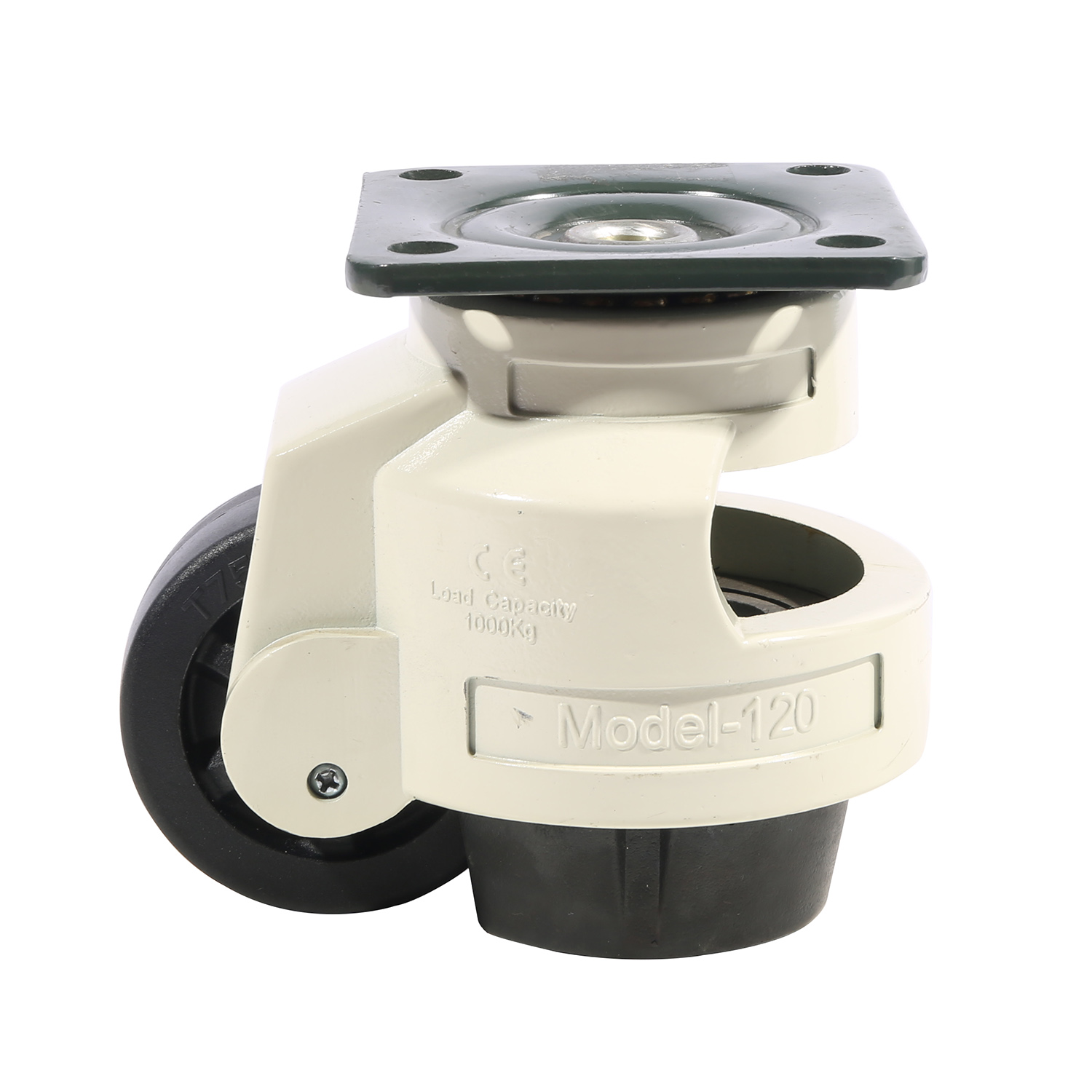
Baseline calculations only provide a starting point. A proper engineering assessment demands a safety factor. Frame this margin as a mandatory risk-mitigation strategy. It is never an optional upgrade. Unforeseen variables constantly threaten equipment integrity. A calculated buffer prevents sudden mechanical shear. It protects your workforce from tipping carts and snapping rigs.
Environmental conditions dictate your adjustment multiplier. Smooth, indoor concrete requires a lower multiplier. You generally apply a 1.2x to 1.3x safety factor here. Uneven surfaces demand much higher margins. Outdoor asphalt, cracked floors, or zones filled with debris create severe shock loads. In these harsh environments, you must apply a 1.5x to 2.0x+ safety factor. The rougher the terrain, the higher your multiplier must climb. Finding the right safety factor for casters ensures long-term operational survival.
Towing methods drastically alter safety margins. Manual pushing happens at walking speeds. Motorized equipment changes the physics entirely. Towing casters behind tuggers or AGVs sustains much higher speeds. High speeds generate immense heat inside wheel materials. Polyurethane can melt internally. Rubber can chunk and tear. Powered towing also creates severe lateral whipping forces around corners. If you use powered tuggers, your safety factor requirements increase significantly.
| Environment & Operation Type | Recommended Multiplier | Primary Risk Factors |
|---|---|---|
| Smooth concrete, manual push (under 3 MPH) | 1.2x - 1.3x | Occasional floor joints, minor debris. |
| Rough floors, cracked asphalt, manual push | 1.5x - 1.7x | Constant vibration, deep cracks, impact shocks. |
| Powered towing (up to 5 MPH), smooth floors | 1.6x - 1.8x | Heat buildup, sustained lateral cornering forces. |
| Powered towing, outdoor or rough terrain | 2.0x - 3.0x+ | Extreme shock loads, severe heat, constant vibration. |
Perfectly balanced loads exist only in theory. Real payloads often sit off-center. Heavy machinery usually features an asymmetrical center of gravity. One side houses a heavy cast-iron motor. The other side holds lightweight electronics. This uneven weight distribution concentrates massive stress on just one or two wheels. If you assume equal distribution, the overloaded wheels will fail rapidly.
You must implement strict compensation strategies for asymmetrical loads. Do not divide the total weight equally across the wheels. Instead, calculate capacity based on the heaviest single point of contact. Find the exact center of gravity. Determine how much weight presses down on the most burdened corner. Size all your wheels based on that maximum isolated weight. This ensures the entire cart remains safe, regardless of how the operator places the payload.
Certain situations demand alternative configurations. A standard four-wheel setup struggles with extreme asymmetrical payloads. Upgrading to a six-wheel tilt cart configuration distributes weight much better. This setup places two larger rigid wheels in the center. It places four smaller swivel wheels on the corners. The center wheels carry the vast majority of the weight. The cart pivots on these main wheels. The corner wheels merely stabilize the load. This design manages off-center mass effectively and improves maneuverability.
Consider these steps when dealing with awkward payloads:
Identify the heaviest component of the payload.
Map the exact center of gravity on the cart deck.
Calculate the isolated downward force on the closest wheel.
Multiply that isolated force by your safety factor.
Apply this high-capacity requirement to all wheels uniformly.
Connecting your calculated weight requirements to physical features marks the final step. Numbers on paper must translate into steel and polyurethane. You must evaluate specific mechanical traits to handle your load. Start with the bearings. Precision ball bearings offer high capacity. They significantly lower rolling resistance. Operators can move heavy weights easier. Roller bearings, however, handle impact durability much better. They absorb shock loads more effectively.
Examine the yoke and rig construction carefully. Stamped steel works well for moderate tasks. It bents under extreme stress. Forged steel manages shear stress flawlessly. Thick forged steel plates handle lateral whipping from tuggers without deforming. When you require true heavy duty caster capacity, always demand forged steel construction and heavy-duty kingpins.
Material trade-offs play a massive role in final performance. Poly-on-iron wheels hold immense weight. They roll easily. Unfortunately, they can crush soft floors over time. High-capacity rubber wheels protect expensive flooring. They roll quietly over debris. However, rubber increases manual push/pull effort drastically. Operators will fatigue faster. You must balance floor protection against ergonomic safety.
Verify the Formula: Confirm you used the exact cart weight plus maximum payload, divided by three.
Apply Safety Margins: Multiply your baseline by the correct environmental and speed factor.
Match Wheel Material: Select tread materials based on floor conditions and ergonomic push-pull limits.
Accurate caster load capacity calculation blends exact cart weight with realistic physics. You must respect the "divide by three" rule. You must apply environmental safety factors rigidly. Skipping these steps leads to dangerous equipment failures. By anticipating dynamic forces and uneven weight distribution, you protect your workers and your facility.
Your next step involves cross-referencing your calculated numbers against manufacturer spec sheets. Pay close attention to dynamic ratings and material limitations. If your facility moves highly complex or extreme asymmetrical payloads, stop guessing. Consult directly with application engineers. They will help you design custom configurations built specifically for your unique operational demands.
A: No. Due to the "divide by three" rule for uneven surfaces, a cart with four 500 lb casters is safely rated for a maximum of 1,500 lbs.
A: Higher speeds generate excess heat in the bearings and wheel material, reducing the effective safe load capacity. Standard ratings assume walking speeds (approx. 3 MPH).
A: Load capacity is how much weight the caster can structurally support without failing; rolling resistance is the amount of ergonomic force required by an operator to move that weight. High capacity does not guarantee low rolling resistance.


